Menu

Server Room Cooling Solutions in Baltimore – Protect Business Continuity With Industrial-Grade Climate Control

Victory HVAC Baltimore delivers precision cooling systems engineered for 24/7 server room operation, ensuring uptime and preventing thermal overload in mission-critical facilities across the Baltimore metro.

Slider Image 1
Slider Image 2
Slider Image 3
Slider Image 4
Slider Image 5
Slider Image 7
Slider Image 8
Slider Image 9
Slider Image 10
Slider Image 11

Why Baltimore Data Centers Face Unique Thermal Management Challenges

Baltimore's humid subtropical climate creates compounding thermal loads for server infrastructure. Summer dew points regularly exceed 70 degrees, forcing computer room air conditioning systems to work harder to maintain the 64-68 degree range required for enterprise hardware. When outside air hits 90 degrees with 80 percent humidity, your standard commercial HVAC cannot maintain the tight temperature and humidity tolerances server equipment demands.

The concentration of federal contractors and healthcare data centers in Baltimore's Inner Harbor and Canton districts means server downtime translates to compliance violations and revenue loss. A single thermal event can cascade through blade servers, storage arrays, and network switches in minutes. You need precision cooling systems designed for constant load, not the intermittent cycling of comfort cooling.

Baltimore's aging electrical grid adds another variable. Voltage sag during peak demand affects compressor operation in standard air conditioning units. Data center cooling units with dedicated power conditioning and redundant circuits prevent the thermal drift that corrupts data integrity. Server room air conditioning must account for both the sensible heat from processors and the latent moisture load from Baltimore's coastal proximity.

Your facility's uptime depends on cooling infrastructure that treats heat as the operational threat it is. Server rack cooling systems with hot aisle containment and variable speed fans respond to real-time thermal mapping, not thermostat guesswork. When your monitoring system flags temperature deviation, you need capacity and precision working together.

Why Baltimore Data Centers Face Unique Thermal Management Challenges
How We Engineer Server Room Climate Control for Maximum Uptime

How We Engineer Server Room Climate Control for Maximum Uptime

We start with thermal load calculation that accounts for current rack density and planned expansion. A 10kW rack generates different BTU loads than a 5kW rack, and your precision cooling systems must scale accordingly. We measure heat output at the chip level, map airflow through cable management trays, and identify hot spots where recirculation defeats your cooling capacity.

Our computer room air conditioning designs separate the server environment from the building envelope. You cannot maintain 65 degrees and 45 percent relative humidity when your cooling system fights against unconditioned outside air. We seal the thermal boundary, install vapor barriers that handle Baltimore's humidity, and size dehumidification capacity for worst-case moisture intrusion.

Redundancy determines whether a compressor failure means an inconvenience or a disaster. We configure N+1 or 2N cooling architectures where backup units carry full load if primary systems fail. Each data center cooling unit connects to isolated power feeds with automatic transfer switches. When BGE experiences grid instability, your servers never see thermal variance.

We install monitoring that tracks supply air temperature, return air temperature, and differential pressure across filters. When a sensor detects deviation, you receive alerts before hardware protection triggers emergency shutdown. Our server rack cooling systems include glycol-based systems for high-density computing and direct expansion units for distributed loads. We match the technology to your heat rejection requirements, not the other way around.

Commissioning includes 72-hour stress testing under full computational load. We verify failover sequences, calibrate humidity controls, and document baseline performance metrics that define normal operation.

What Happens During Your Cooling System Assessment

Server Room Cooling Solutions in Baltimore – Protect Business Continuity With Industrial-Grade Climate Control
01

Facility Thermal Audit

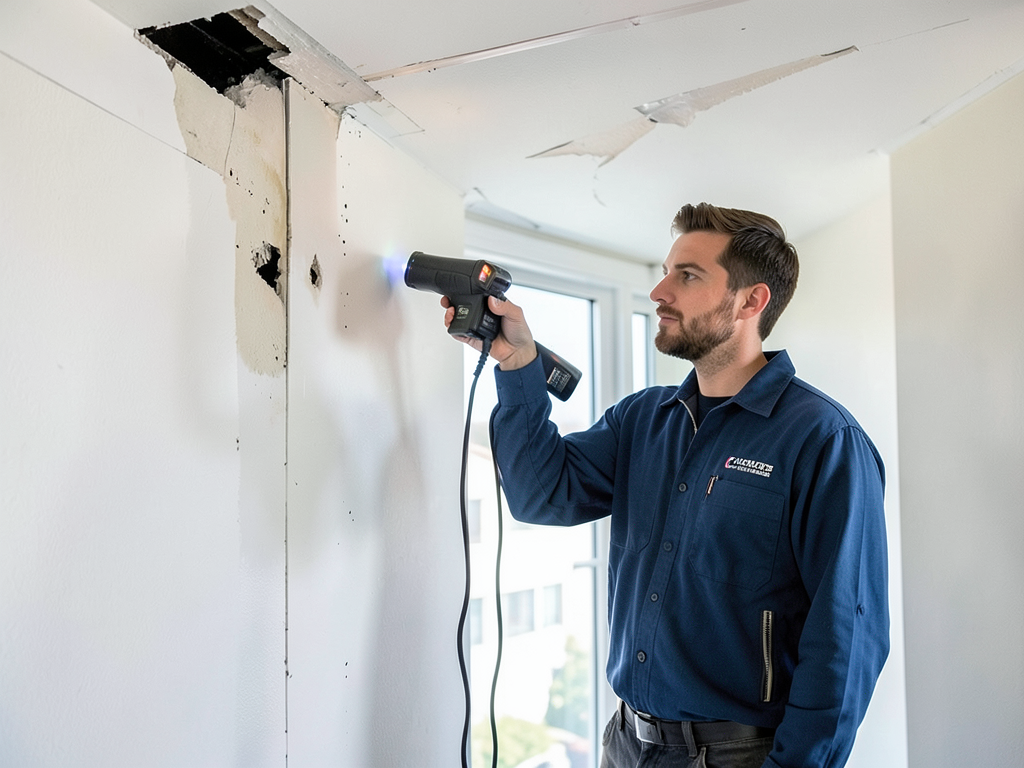
We map your current server room layout, document existing cooling capacity, and measure actual thermal output from active equipment. Our technicians use infrared cameras to identify hot spots, check airflow velocity through perforated floor tiles, and verify that supply air reaches equipment intakes at design temperature. This audit reveals whether your current system can handle growth or if thermal limits will constrain expansion.
02

Load Calculation and Design

We calculate sensible and latent heat loads based on your IT equipment specifications and occupancy patterns. Our engineers design ductwork paths that eliminate recirculation, select precision cooling systems with appropriate redundancy levels, and specify controls that maintain setpoints within one degree. You receive drawings showing equipment placement, electrical requirements, and integration points with your building management system before installation begins.
03

Installation and Validation Testing

Our crews install server room air conditioning during scheduled maintenance windows to avoid disrupting operations. We pressure test refrigerant lines, verify electrical connections meet manufacturer specifications, and program control sequences that respond to your specific thermal profiles. Post-installation testing includes simulated failure scenarios where we verify backup units assume load automatically. You receive documentation showing system performance matches design parameters before we consider the project complete.

Why Baltimore Facilities Trust Our Mission-Critical Cooling Expertise

Victory HVAC Baltimore understands the difference between keeping an office comfortable and protecting a seven-figure server investment. We have deployed data center cooling units in federal facilities where security clearances and uptime requirements leave zero margin for error. Our technicians hold EPA Section 608 certification for refrigerant handling and complete manufacturer training on the precision cooling systems we install.

Baltimore's mix of historic buildings and modern construction means we adapt cooling solutions to your facility's constraints. A renovated warehouse in Locust Point requires different ductwork strategies than a purpose-built data center in Owings Mills. We have installed computer room air conditioning in buildings where load-bearing walls limit equipment placement and ceiling heights constrain plenum space. Our designs work within your building's reality, not against it.

We maintain relationships with equipment manufacturers that give you priority access to replacement components when failures occur. A failed compressor in a standard HVAC unit might take a week to source. The same component for a precision cooling system can take three weeks unless your contractor has vendor partnerships that expedite orders. Our inventory includes common wear items for the server rack cooling systems we install most frequently.

Local building officials know our permit applications meet code requirements the first time. Baltimore City requires separate permitting for refrigeration systems above certain capacities, and our documentation includes load calculations, equipment specifications, and electrical demand letters that satisfy plan review. You avoid the delays that come from incomplete submissions or designs that conflict with local amendments to the mechanical code.

What to Expect From Your Server Cooling Installation

Project Timeline and Staging

Most server room cooling installations take two to four weeks from equipment delivery to final commissioning. We stage work during maintenance windows or off-peak hours to minimize impact on operations. Complex projects involving structural modifications or electrical service upgrades require longer timelines. We provide a detailed schedule during the design phase showing when we need facility access, when you should expect noise or utility interruptions, and when systems will be operational. Rush projects are possible when business continuity demands faster deployment, though equipment lead times from manufacturers remain the limiting factor.

Initial Assessment Process

Our evaluation begins with a facility walk-through where we document your current cooling infrastructure, measure server room dimensions, and review electrical capacity at your service panels. We ask about planned IT equipment additions, peak occupancy loads, and whether your facility requires redundancy for compliance reasons. You receive a written assessment explaining whether your existing system can be upgraded or if replacement makes more sense. We include thermal load calculations showing how we arrived at tonnage requirements and explain why we recommend specific precision cooling technologies for your application.

System Performance Standards

Your completed installation maintains server room temperature within plus or minus two degrees of setpoint and relative humidity within five percent of target levels. Supply air reaches equipment intakes at the temperature we specify during design, not 10 degrees warmer due to ductwork heat gain. Monitoring systems provide real-time data on cooling capacity utilization, refrigerant pressures, and airflow rates. You can verify that backup units activate automatically during simulated failures and that control sequences respond to thermal events before hardware protection systems trigger shutdowns. We provide performance documentation showing your system meets design specifications.

Ongoing Maintenance and Support

Precision cooling systems require quarterly maintenance to sustain design performance. Our service includes filter replacement, refrigerant charge verification, condensate drain inspection, and electrical connection testing. We check that temperature and humidity sensors remain calibrated and verify control sequences execute correctly. Annual maintenance adds compressor oil analysis, thermal imaging of electrical components, and detailed performance testing against baseline metrics. When monitoring systems detect anomalies between service visits, our technicians respond within hours to prevent thermal events from escalating into equipment damage. Service agreements include priority scheduling and discounted labor rates for emergency repairs.

Frequently Asked Questions

You Have Questions,
We Have Answers

How to cool down a server room? +

Install a dedicated precision air conditioning system designed for continuous operation. Standard HVAC cannot handle the 24/7 heat load from servers. Use hot aisle/cold aisle containment to separate airflow paths. Position intake vents near equipment inlets and exhaust at heat sources. Monitor room temperature constantly with digital sensors. Redundant cooling units prevent downtime if one fails. Baltimore's humidity requires dehumidification controls to prevent condensation on equipment. Seal cable penetrations and gaps to maintain positive pressure. Clean air filters monthly to maintain airflow efficiency. Professional installation ensures proper BTU calculations for your specific server density and rack configuration.

How to remove heat from a server room? +

Heat removal requires calculated BTU capacity matching your server load output. Precision cooling units pull heat through refrigerant cycles or chilled water systems. Hot aisle containment captures exhaust air before it mixes with supply air. Supplemental exhaust fans vent heat directly outside when ambient conditions allow. Raised flooring distributes cold air evenly under racks. In-row cooling units position closer to heat sources for targeted removal. Baltimore facilities benefit from economizer modes during cooler months, using outside air to reduce compressor runtime. Heat exchangers transfer thermal energy away from critical zones. Regular maintenance ensures coils stay clean and refrigerant levels stay optimal for maximum heat transfer efficiency.

How to cool a server room without AC? +

Evaporative cooling works in low-humidity environments but fails in Baltimore's humid climate. Passive cooling through thermal mass and night ventilation cannot handle concentrated server loads. You can use free cooling economizers when outdoor temperatures drop below 55 degrees, bypassing compressors. Water-cooled systems with cooling towers remove heat without traditional AC compressors. Liquid cooling systems circulate chilled water directly to server components. These alternatives still require mechanical refrigeration backup for summer months and peak loads. Attempting to cool servers without proper environmental controls voids equipment warranties and causes premature hardware failure. Professional assessment determines if hybrid approaches meet your uptime requirements and compliance standards.

What is the best cooling for a server? +

Precision air conditioning with N plus 1 redundancy provides the most reliable server cooling. Computer room air conditioning units maintain tight temperature and humidity tolerances. In-row cooling positions units between rack rows for shorter air paths and higher efficiency. Rear-door heat exchangers mount directly on cabinets to capture exhaust immediately. Direct-to-chip liquid cooling handles high-density blade servers exceeding 20 kW per rack. Your choice depends on rack density, available floor space, and budget. Baltimore data centers often combine multiple technologies for redundancy. Avoid residential-grade equipment that lacks precision controls and 24/7 rated components. Consult load calculations before selecting capacity to prevent undersizing and costly expansions.

Does putting ice behind a fan work? +

No. Ice behind a fan creates temporary localized cooling but fails in server environments. The method produces humidity as ice melts, creating condensation risk on electronic components. Cooling capacity disappears within hours as ice melts. This approach cannot maintain the constant 68 to 72 degree range servers require. Baltimore's summer humidity makes moisture accumulation worse. Commercial server rooms need calculated BTU removal matching heat generation rates. Ice provides no redundancy if cooling fails. You risk equipment damage, data loss, and warranty voids. Professional cooling systems include humidity control, air filtration, and monitoring that ice cannot provide. Emergency situations require temporary commercial spot coolers, not makeshift solutions.

Is 80 degrees too hot for a server room? +

Yes. Most server manufacturers specify maximum operating temperatures between 59 and 89 degrees, but sustained operation at 80 degrees accelerates component degradation. Hard drives fail faster at elevated temperatures. Processors throttle performance to prevent overheating, slowing your applications. ASHRAE recommends keeping server inlet temperatures between 64 and 80 degrees, with 68 to 72 degrees ideal for longevity. You risk thermal shutdowns during Baltimore summer heat spikes if baseline temperature sits at 80 degrees. Higher temperatures void some equipment warranties. Energy costs increase as internal fans spin faster to compensate. Calculate your current heat load and install adequate precision cooling before hardware failures cause business interruption and data recovery expenses.

How do the amish keep cool in the summer? +

This question does not apply to commercial server room cooling. Amish communities use passive ventilation, whole-house fans, shaded porches, and basement spaces to manage residential comfort. These methods cannot maintain the precise environmental controls servers require. Server rooms need consistent temperatures within narrow ranges, filtered air, humidity control, and redundant mechanical systems. Baltimore data centers require engineered solutions with monitoring and failover capacity. Passive cooling strategies fail when heat loads exceed several kilowatts per rack. If you face budget constraints, consider colocation services or managed hosting rather than attempting inadequate cooling approaches. Professional assessment identifies minimum viable cooling infrastructure for your specific equipment and uptime requirements.

What happens if a server room gets too hot? +

Servers throttle performance first, slowing critical business operations. Continued temperature rise triggers automatic shutdowns to prevent permanent component damage. Hard drives experience increased failure rates and potential data corruption. Memory modules develop errors affecting data integrity. Power supplies fail under thermal stress. Cooling fans run at maximum speed, accelerating wear. Baltimore facilities without adequate cooling face cascading failures during summer humidity and heat. Network switches and storage arrays shut down, causing total outages. Recovery requires hardware replacement and potential data restoration from backups. Some damage voids manufacturer warranties. Downtime costs exceed cooling system investments. Temperature monitoring with automated alerts prevents reaching critical thresholds before equipment protection mechanisms activate.

How do server farms stay cool? +

Large server farms use redundant precision cooling with hot aisle/cold aisle containment throughout the facility. They install economizers to use outside air when Baltimore temperatures allow free cooling. Chilled water systems with cooling towers handle massive heat loads more efficiently than direct expansion units. Variable speed fans and compressors adjust capacity to match real-time loads. Computational fluid dynamics modeling optimizes airflow before construction. Some hyperscale facilities use evaporative cooling in dry climates or liquid cooling for high-density zones. Thermal energy storage systems shift cooling loads to off-peak hours. Enterprise monitoring systems track temperature at rack level with predictive maintenance. Multiple utility feeds and backup generators ensure cooling stays operational during power events.

What is the $5000 AC rule? +

The Section 179 tax deduction allows businesses to expense up to a certain amount for qualifying equipment purchases in the year installed, rather than depreciating over time. The specific dollar threshold changes annually based on tax law. This provision can apply to HVAC systems and server room cooling equipment if used for business purposes. Consult your tax professional to determine if your cooling system qualifies and what documentation you need. Baltimore businesses replacing outdated cooling infrastructure may benefit from immediate expensing. The rule includes conditions about equipment type and percentage of business use. Additional energy efficiency incentives may apply through utility rebate programs for qualifying precision cooling equipment meeting efficiency standards.

How Baltimore Harbor Humidity Affects Server Room Cooling Design

Baltimore's proximity to the Chesapeake Bay creates humidity challenges that generic cooling systems cannot handle. Summer mornings bring moisture-saturated air that infiltrates buildings through loading docks, personnel doors, and ventilation systems. When this humid air contacts cold supply ducts or server equipment, condensation forms on surfaces and creates the moisture conditions that cause corrosion on circuit boards and electrical connections. Data center cooling units designed for Baltimore must include reheat coils that remove moisture without overcooling the space, maintaining the 40-50 percent relative humidity range that protects electronics while preventing static discharge.

Baltimore's concentration of federal data centers and healthcare facilities means our technicians understand compliance requirements that govern mission-critical infrastructure. We design server room air conditioning systems that meet NIST 800-53 controls for environmental protection and HIPAA technical safeguards for availability. Our documentation includes the reliability calculations and redundancy justifications that auditors expect during compliance reviews. When your facility needs cooling infrastructure that satisfies both operational demands and regulatory obligations, local expertise prevents the costly retrofits that result from designs that ignore Baltimore's specific requirements.
HVAC Services in The Baltimore Area

Easily locate Victory HVAC and our service areas on the map below. We are strategically positioned to provide prompt and efficient heating, ventilation, and air conditioning services across the entire region. Whether you're seeking a new installation, emergency repair, or routine maintenance, our team is readily available to reach your location quickly, ensuring your comfort is restored without delay. Feel free to zoom in to see our exact location or contact us for directions and service area details.

Address:
Victory HVAC Baltimore, 729 E Pratt St, Baltimore, MD, 21202

Additional Services We Offer

Our news updates

Latest Articles & News from The Blogs

The Most Effective Ways to Improve Indoor Air Quality in Your Older Home in Original Northwood Older homes in Original…

The Most Effective Ways to Improve Indoor Air Quality in Your Older Home in Original Northwood

The Most Effective Ways to Improve Indoor Air Quality in Your Older Home in Original Northwood Older homes in Original…

Why Proper Load Calculations Are Vital for New Construction Homes in White Marsh

Why Proper Load Calculations Are Vital for New Construction Homes in White Marsh Building a new home in White Marsh…

Protecting Your Outdoor AC Compressor from Corrosion and Salt Air in Bowleys Quarters

Protecting Your Outdoor AC Compressor from Corrosion and Salt Air in Bowleys Quarters The salty breeze from the Chesapeake Bay…

Contact Us

Server downtime costs you revenue every minute your cooling fails. Call Victory HVAC Baltimore at (443) 390-4933 for a thermal assessment that identifies vulnerabilities before they become outages. We design, install, and maintain precision cooling systems that keep your operations running.