
Menu

Commercial Rooftop Unit Installation in Baltimore – Minimize Downtime and Maximize Cooling Capacity

Victory HVAC Baltimore delivers commercial RTU installation with precision planning, off-hours scheduling, and industrial-grade equipment designed to keep your facility operating without interruption or lost revenue.

Slider Image 1
Slider Image 2
Slider Image 3
Slider Image 4
Slider Image 5
Slider Image 7
Slider Image 8
Slider Image 9
Slider Image 10
Slider Image 11

Why Baltimore Commercial Buildings Demand Strategic Rooftop HVAC Planning

Baltimore's commercial real estate sits at the intersection of Mid-Atlantic humidity and urban heat island effects. Your building's rooftop unit works harder here than in cooler climates. When ambient temperatures climb above 95 degrees on asphalt and membrane roofing, standard RTU equipment struggles to maintain setpoints. Add the Chesapeake Bay's moisture load and you face compressor stress, refrigerant migration, and coil fouling that shortens equipment life by 30 percent.

Your current rooftop package unit may be undersized for the thermal load your building generates now. Tenant density increases. Server rooms expand. Manufacturing processes evolve. What worked five years ago may be costing you in comfort complaints and energy waste today. A commercial rooftop HVAC installation is not just equipment replacement. It is capacity analysis, load calculation, and curb adapter engineering specific to your building's structural limitations and your business operations.

Baltimore's building stock includes warehouse conversions in Port Covington, legacy manufacturing facilities in Locust Point, and medical office buildings near Johns Hopkins. Each building type presents unique rooftop access challenges, structural load ratings, and electrical service constraints. A commercial RTU install requires coordination with building engineers, advance crane scheduling, and electrical upgrades that must happen without disrupting daily operations. Off-the-shelf solutions do not work. You need a rooftop AC replacement strategy built around your revenue cycle and your facility's physical realities.

Why Baltimore Commercial Buildings Demand Strategic Rooftop HVAC Planning
How We Engineer Commercial RTU Installation for Operational Continuity

How We Engineer Commercial RTU Installation for Operational Continuity

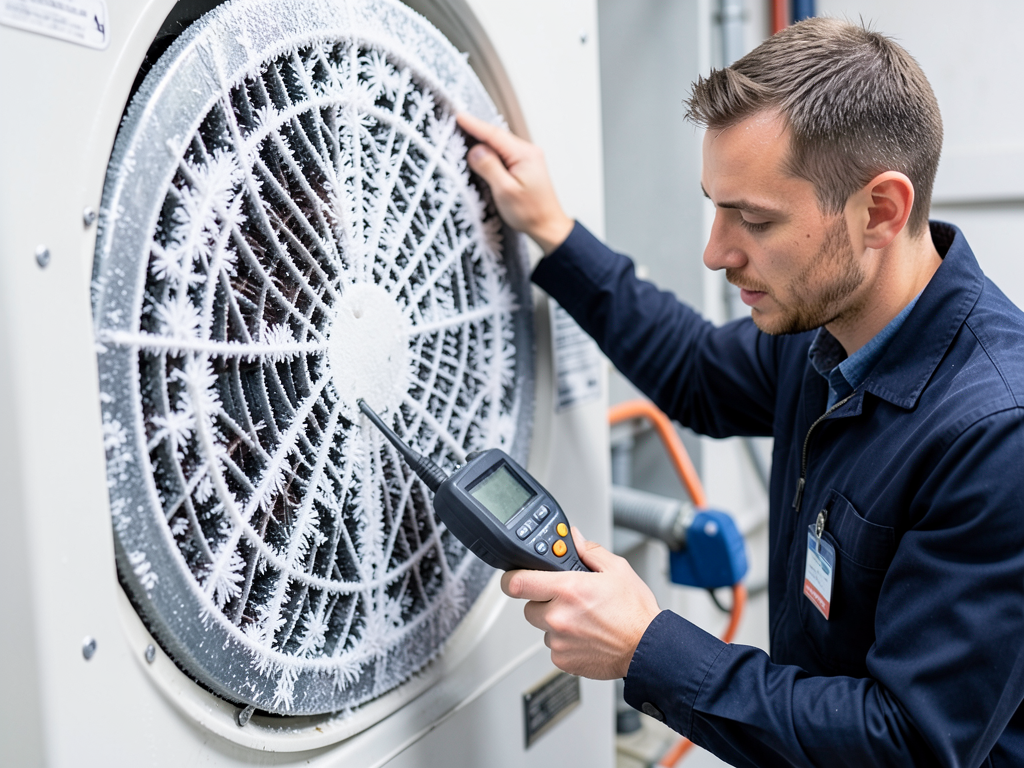
We begin with thermal imaging and refrigerant circuit analysis on your existing rooftop unit. This diagnostic phase identifies whether you are facing compressor failure, economizer malfunction, or control board degradation. We pull service history and utility data to calculate your actual cooling load versus nameplate capacity. In many cases, your unit is cycling short or running continuously because it was never properly commissioned.

Our commercial rooftop HVAC installation process includes structural load assessment. Older buildings in Baltimore were not designed for modern 15-ton package units. We verify roof deck capacity, existing curb condition, and whether your electrical service can handle variable frequency drive compressors and high-efficiency fan arrays. If your curb is rusted or undersized, we fabricate a new one and coordinate flashing with your roofing contractor to maintain warranty compliance.

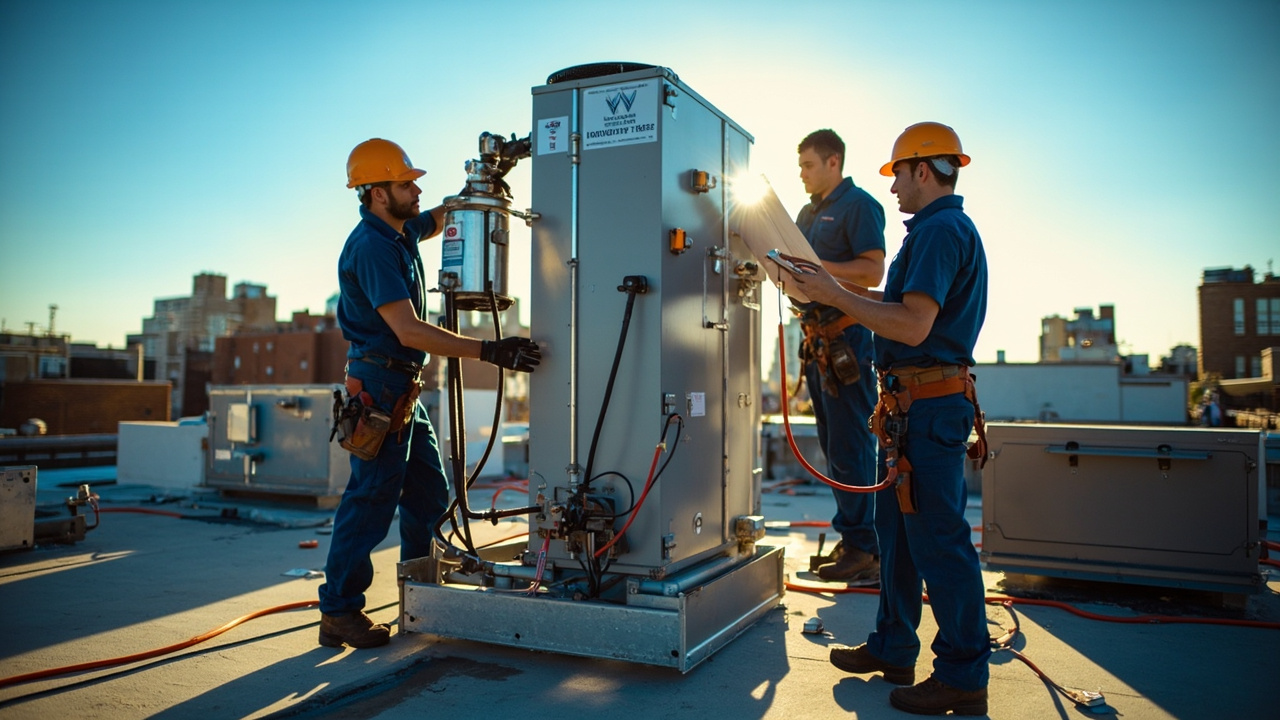
Equipment selection is not a catalog exercise. We match tonnage, SEER rating, and refrigerant type to your operating profile. If you run three shifts, you need a unit rated for continuous duty with dual compressors. If you operate a cold storage facility, you need low ambient controls and crankcase heaters. We specify Copeland scroll compressors, microchannel coils, and control systems that integrate with your building automation platform. Crane scheduling happens after hours or on weekends. Rigging plans account for overhead utilities, parapet heights, and adjacent tenant spaces. You do not lose a business day to our installation.

Our Commercial RTU Installation Workflow

Commercial Rooftop Unit Installation in Baltimore – Minimize Downtime and Maximize Cooling Capacity
01

Load Analysis and Equipment Specification

We calculate your building's actual cooling load using ACCA Manual N and verify electrical service capacity. You receive a specification sheet detailing tonnage, SEER rating, compressor type, and control integration requirements. We identify curb modifications, gas line upgrades, and electrical work required before crane day. This phase prevents surprises and ensures your new rooftop package unit matches your operational demands, not just your old equipment's nameplate.
02

Crane Rigging and Installation

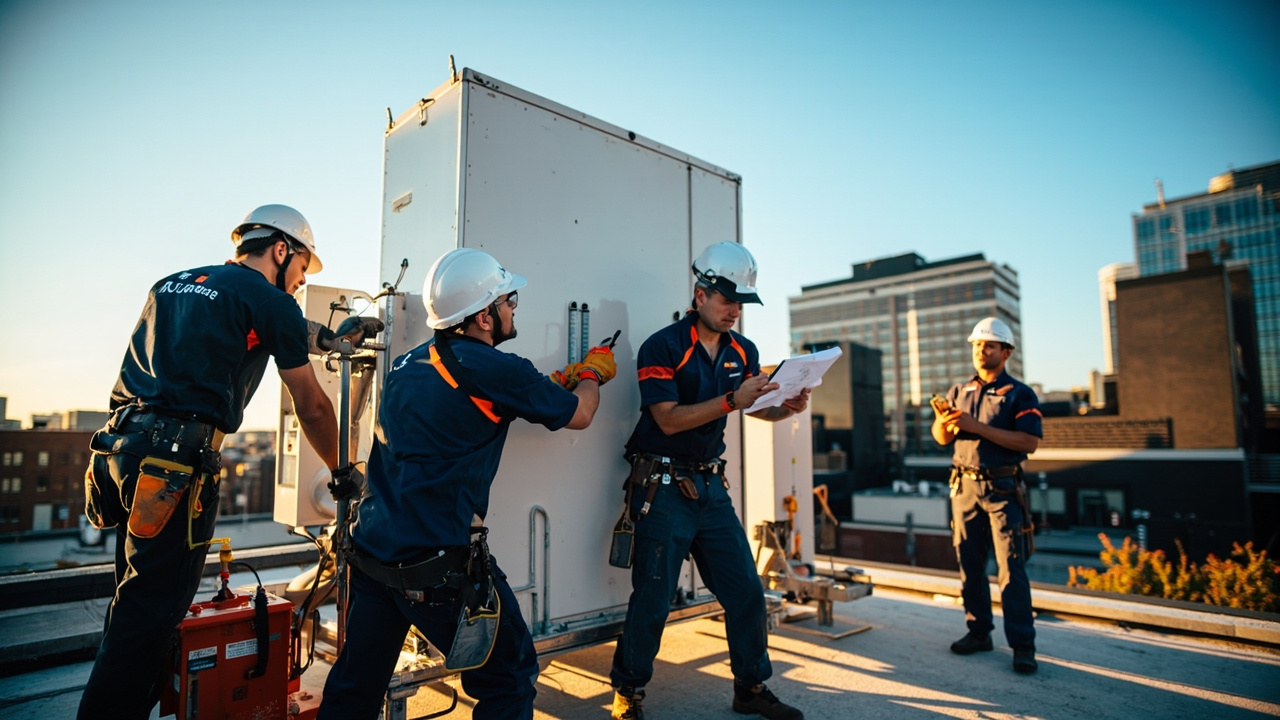
We coordinate crane access, obtain city permits, and schedule rigging during your lowest-impact hours. Our crews disconnect refrigerant lines, electrical conduit, and gas piping from your old unit. The new RTU is set on the curb, leveled, and secured. We install vibration isolators, reconnect utilities, and pressure-test refrigerant circuits before startup. Flashing and curb sealing happen immediately to prevent water intrusion. Your building remains occupied and operational throughout the commercial RTU install process.
03

Commissioning and Performance Verification

We do not walk away after startup. Our technicians verify airflow at each diffuser, check refrigerant superheat and subcooling, and calibrate economizer dampers. We program setpoints into your building automation system and train your facility manager on maintenance schedules. You receive a commissioning report with baseline performance metrics. This documentation protects your equipment warranty and establishes a performance benchmark for future service. Your new rooftop AC replacement delivers measurable efficiency and reliable comfort from day one.

Why Baltimore Facility Managers Trust Victory HVAC for Rooftop Unit Installation

You cannot afford to trust rooftop unit installation to a residential contractor scaling up. Commercial RTU work requires rigging certifications, refrigerant handling at scale, and familiarity with building codes specific to Baltimore City and Baltimore County. We work directly with your building engineer and general contractor to coordinate utility shutdowns, roof access, and tenant notifications. Our crews carry commercial liability coverage and worker's comp that meet your building's COI requirements.

We have installed rooftop package units on medical office buildings in Canton, cold storage facilities in Curtis Bay, and manufacturing plants in Dundalk. Each project required custom curb adapters, electrical service upgrades, and crane access through tight urban corridors. We understand Baltimore's building inspection process and coordinate with the Department of Housing and Community Development for permit approvals. You do not wait weeks for inspections because we submit complete documentation upfront.

Our equipment suppliers are commercial-grade distributors, not big-box retailers. You get Carrier, Trane, and Lennox RTUs with factory startup warranties and priority parts access. We do not install builder-grade equipment and hope it holds up under continuous duty. Your rooftop AC replacement includes commissioning reports, O&M manuals, and integration with your preventive maintenance program. When you call for service, we already have your equipment history, control sequences, and parts inventory on file.

Baltimore's commercial real estate market moves fast. Your tenants expect comfort. Your operations cannot pause for HVAC failures. We treat every commercial rooftop HVAC installation as a mission-critical infrastructure upgrade, not a box swap.

What to Expect from Our Commercial RTU Installation Process

Project Timeline and Scheduling Flexibility

Most commercial RTU installs take two to four days from equipment delivery to final commissioning. The timeline depends on electrical service upgrades, curb fabrication, and crane availability. We schedule rigging during your off-hours to avoid disrupting business operations. If you run a 24-hour facility, we coordinate phased installations that maintain partial cooling throughout the project. You receive a detailed project schedule during the proposal phase, with contingency plans for weather delays or unexpected structural issues. We do not leave your building without climate control.

Pre-Installation Site Assessment and Coordination

Before any equipment arrives, we conduct a rooftop survey to verify access paths, structural load capacity, and utility routing. We coordinate with your roofing contractor to protect membrane integrity and maintain warranty compliance. If your building has active tenants or sensitive equipment, we develop a noise mitigation plan and schedule work to minimize disruption. You receive a site assessment report detailing any required upgrades to electrical service, gas lines, or curb adapters. This upfront planning prevents change orders and ensures your commercial rooftop HVAC installation stays on schedule and on budget.

Performance Commissioning and Documentation

After installation, we commission your new rooftop package unit according to ASHRAE standards. This includes verifying airflow rates, refrigerant charge, economizer operation, and control sequence accuracy. We measure power draw, temperature differentials, and humidity control to confirm your system meets design specifications. You receive a commissioning report with baseline performance data, maintenance schedules, and warranty registration. This documentation protects your investment and establishes a performance benchmark for future service calls. Your facility manager gets hands-on training to understand control functions and routine maintenance tasks.

Ongoing Service and Preventive Maintenance

Your new RTU installation includes a one-year follow-up inspection to verify performance and address any operational issues. We offer preventive maintenance agreements that include quarterly filter changes, refrigerant level checks, and control calibration. Our service database tracks your equipment history, so when you call for support, we already know your system configuration and parts inventory. Commercial HVAC equipment requires proactive maintenance to achieve its rated lifespan. We build maintenance schedules around your operational calendar to avoid disrupting business hours or tenant comfort.

Frequently Asked Questions

You Have Questions,
We Have Answers

How much does it cost to install a rooftop unit? +

Commercial rooftop unit installation in Baltimore typically ranges from $8,000 to $25,000 depending on tonnage, efficiency rating, and roof accessibility. A 5-ton unit costs less than a 20-ton unit. Factors include curb adapter fabrication, crane rental for multi-story buildings, electrical upgrades to meet Baltimore City code, and ductwork modifications. Baltimore's humid summers and freeze-thaw winters demand higher SEER ratings and cold-weather packages, increasing upfront costs. Flat commercial roofs common in Canton and Harbor East simplify installation versus pitched roofs. Request itemized quotes that separate equipment, labor, permits, and structural reinforcement costs.

What is the $5000 rule for AC? +

The $5,000 rule is a repair-versus-replace formula used by commercial facility managers. Multiply the unit's age by the repair cost. If the result exceeds $5,000, replacement makes more financial sense than repair. Example: a 12-year-old rooftop unit needing $500 in compressor work equals $6,000, signaling replacement. In Baltimore's commercial buildings, this rule helps avoid throwing money at aging equipment facing recurring failures. Factor in energy efficiency gains from newer units. Baltimore's utility rates and tax incentives often tip the scale toward replacement sooner. This formula provides a quick ROI benchmark for budgeting decisions.

What is the 2 foot rule for HVAC? +

The 2-foot rule requires a minimum 24-inch clearance around all sides of a rooftop unit for service access and airflow. Baltimore City building inspectors enforce this during commercial HVAC permits. Tight clearances on crowded flat roofs in Fells Point or downtown restrict technician access to panels, filters, and electrical disconnects. Poor clearance traps heat, reducing efficiency and shortening compressor life. Snow accumulation in Baltimore winters compounds clearance issues. Plan rooftop layouts accounting for multiple units, exhaust fans, and rooftop access paths. Violating clearance codes fails inspection and creates liability during service calls or emergencies.

What are the disadvantages of RTU? +

Rooftop units create noise pollution, structural load concerns, and exposure to Baltimore's harsh weather. Compressors and fans generate vibration transmitted through roof decking into commercial spaces below. Constant UV exposure, humidity, and freeze-thaw cycles accelerate component degradation faster than indoor systems. Roof leaks from curb penetrations risk water damage to inventory or operations. RTUs require crane access for replacement, increasing labor costs on multi-story buildings. Security is another issue since units sit exposed on accessible roofs in urban Baltimore. Regular maintenance becomes critical to offset these disadvantages and maximize the 15 to 20-year lifespan.

How much is HVAC for a 2000 square-foot house? +

This question targets residential systems, not commercial rooftop units. A 2,000-square-foot house in Baltimore typically needs a 3 to 4-ton residential split system, costing $5,000 to $12,000 installed. Commercial rooftop units serve larger square footage and use different sizing calculations based on occupancy load, ventilation requirements, and business operations. A 2,000-square-foot retail space might need a 5 to 7.5-ton RTU due to customer traffic, lighting heat, and storefront glass exposure. Commercial pricing starts higher due to code compliance, cranes, and three-phase electrical. Do not confuse residential tonnage rules with commercial load calculations.

What are the disadvantages of rooftop units? +

Rooftop units face accelerated wear from Baltimore's climate extremes. Exposure to UV radiation, rain, snow, and temperature swings degrades coils, wiring, and cabinetry faster than indoor equipment. Roof membrane penetrations for curbs create leak risks during heavy storms. Noise from compressors and condenser fans disrupts nearby offices or residential buildings in mixed-use Baltimore neighborhoods. Structural loading requires roof reinforcement on older buildings, adding installation costs. Security concerns exist since units sit exposed and accessible. Crane rental for replacement increases downtime and costs. Despite disadvantages, RTUs save interior floor space and simplify zoning in commercial buildings.

What is the 3 minute rule for AC? +

The 3-minute rule prevents compressor damage by enforcing a minimum three-minute delay between shutdown and restart. Refrigerant pressure must equalize before the compressor engages again. Restarting too quickly forces the compressor to start against high head pressure, overheating the motor and tripping breakers. Baltimore's variable spring and fall weather causes frequent cycling, making this rule critical. Commercial rooftop units use time-delay relays or pressure switches to enforce the delay automatically. If your RTU short-cycles or trips breakers repeatedly, the time-delay relay may have failed. Ignoring this rule voids warranties and leads to premature compressor failure.

What is the tax credit for the new air conditioner 2025? +

The 2025 federal tax credit offers up to $1,200 for qualifying high-efficiency HVAC equipment under the Inflation Reduction Act's Energy Efficient Home Improvement Credit. Commercial property owners may qualify for the 179D deduction or the Investment Tax Credit for renewable energy integration with rooftop units. Requirements include minimum SEER2 and EER2 ratings. Baltimore businesses should consult tax advisors since incentives vary by building type and ownership structure. Maryland offers additional state rebates through BGE and Pepco for commercial HVAC upgrades. Combine federal and state incentives to offset rooftop unit costs. Verify current IRS guidelines as amounts and eligibility change annually.

Is a 3 ton AC too big for 1500 square feet? +

A 3-ton AC typically handles 1,500 square feet in residential applications, but proper sizing depends on insulation, window exposure, and Baltimore's humid climate. Oversizing causes short cycling, poor dehumidification, and higher energy bills. Commercial spaces require load calculations factoring occupancy, equipment heat gain, and ventilation codes. A 1,500-square-foot Baltimore office with west-facing glass and 20 occupants needs more capacity than a warehouse. Rooftop units use tons differently than residential splits due to ventilation air requirements. Manual J calculations for residential or ACCA Commercial Load Calculations determine correct sizing. Never guess tonnage based on square footage alone.

Is 2.5 ton AC big enough for 2000 sq ft? +

A 2.5-ton residential AC marginally covers 2,000 square feet in moderate climates but struggles in Baltimore's humid summers. Proper sizing requires Manual J load calculations accounting for insulation, windows, and occupancy. Commercial rooftop units serving 2,000 square feet need 4 to 6 tons depending on business type. A retail space with high traffic and glass storefronts demands more capacity than a back-office warehouse. Baltimore's summer humidity requires equipment sized for latent load removal, not just temperature control. Undersized units run continuously, fail prematurely, and create comfort complaints. Always base tonnage on engineered load calculations, not rules of thumb.

How Baltimore's Harbor Humidity and Urban Heat Load Impact Commercial RTU Performance

Baltimore's proximity to the Chesapeake Bay creates sustained humidity levels that challenge commercial rooftop HVAC systems. When outdoor air reaches 85 percent relative humidity during summer months, your RTU's evaporator coil works harder to remove latent heat. This moisture load increases compressor runtime and reduces system efficiency by 20 to 30 percent compared to dry climates. Buildings in Fells Point, Harbor East, and Locust Point face accelerated coil corrosion from salt air, requiring stainless steel drain pans and coated coil fins. Your rooftop unit installation must account for these environmental factors to deliver reliable performance and acceptable equipment lifespan.

Baltimore City enforces strict building codes through the Department of Housing and Community Development. Any commercial RTU install requires mechanical permits, electrical inspections, and compliance with the International Mechanical Code. We work directly with city inspectors and submit complete plans to avoid delays. Our crews understand local requirements for refrigerant handling, gas line sizing, and emergency shutoff placement. Choosing a contractor familiar with Baltimore's permitting process protects you from failed inspections, code violations, and project delays that cost you revenue. We have installed hundreds of rooftop package units across Baltimore's commercial districts and maintain relationships with local inspectors to expedite approvals.
HVAC Services in The Baltimore Area

Easily locate Victory HVAC and our service areas on the map below. We are strategically positioned to provide prompt and efficient heating, ventilation, and air conditioning services across the entire region. Whether you're seeking a new installation, emergency repair, or routine maintenance, our team is readily available to reach your location quickly, ensuring your comfort is restored without delay. Feel free to zoom in to see our exact location or contact us for directions and service area details.

Address:
Victory HVAC Baltimore, 729 E Pratt St, Baltimore, MD, 21202

Additional Services We Offer

Our news updates

Latest Articles & News from The Blogs

The Best Time to Switch Your Guilford Home from Heating to Cooling Mode When should you flip that thermostat switch…

The Best Time to Switch Your Guilford Home from Heating to Cooling Mode

The Best Time to Switch Your Guilford Home from Heating to Cooling Mode When should you flip that thermostat switch…

How Much Space Does Your AC Unit Actually Need from Landscaping in Your Ruxton Yard?

How Much Space Does Your AC Unit Actually Need from Landscaping in Your Ruxton Yard? Your outdoor AC condenser needs…

Common Reasons Your Brooklyn Park AC Is Blowing Warm Air

Common Reasons Your Brooklyn Park AC Is Blowing Warm Air Your air conditioner is running but the air coming from…

Contact Us

Your rooftop unit keeps your business running. Call Victory HVAC Baltimore at (443) 390-4933 to schedule a load analysis and equipment assessment. We deliver commercial rooftop HVAC installation that minimizes downtime and maximizes cooling capacity.