
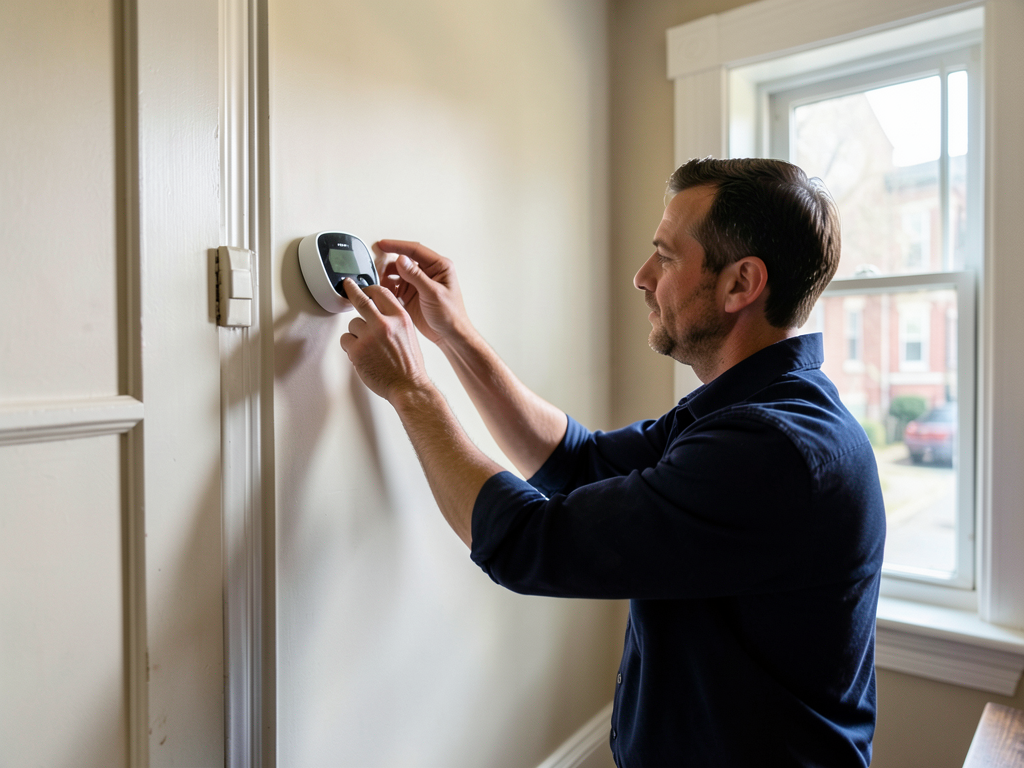
Where You Should Place Your Thermostat in a Large Bolton Hill Home for Perfect Comfort
Finding the perfect spot for your thermostat in a historic Bolton Hill home can feel like solving a puzzle. These grand 19th-century mansions feature high ceilings, large rooms, and architectural details that make temperature control challenging. The right thermostat placement ensures every room maintains consistent comfort while reducing energy waste.. Read more about Why Your Bolton Hill Radiators Are Making Loud Clanging Noises.
Thermostat location directly impacts your HVAC system’s performance. A poorly placed unit reads incorrect temperatures and causes your system to run too long or not enough. This leads to hot and cold spots throughout your home and drives up utility bills. In Baltimore’s humid subtropical climate with summer temperatures often exceeding 90 degrees and winter lows in the 20s, proper placement becomes even more critical.. Read more about The Most Energy Efficient Thermostat Settings for the Maryland Summer and Winter in 2026.
Central Walls Away from Temperature Extremes
The golden rule for thermostat placement centers on mounting the unit on an interior wall away from temperature fluctuations. Interior walls maintain more stable temperatures because they share space with conditioned areas rather than exterior elements. This stability provides accurate readings that reflect your home’s true comfort level.. Read more about The Best Smart Thermostats for Mount Washington Homes with Older Wiring.
Choose walls that run through the center of your home rather than those bordering the outside. Exterior walls experience significant temperature swings from outdoor conditions, direct sunlight, and wind exposure. These fluctuations cause your thermostat to register false readings and trigger unnecessary heating or cooling cycles.
Interior hallways often make excellent locations because they typically lack large windows and maintain consistent airflow. The ideal spot sits in a frequently used area where air circulates naturally but avoids direct drafts from vents or doors.
Five Places You Should Never Install a Thermostat
Certain locations guarantee inaccurate temperature readings and system inefficiency. Avoid these five problem areas at all costs.
Above Air Vents or Returns
Placing your thermostat directly above or beside HVAC vents creates a false reading scenario. The immediate blast of conditioned air tricks the sensor into thinking the entire room has reached the set temperature. Your system shuts off prematurely while other areas remain uncomfortable.
Supply vents push out air at temperatures significantly different from room ambient. Return vents draw air across the thermostat, creating localized cooling or heating effects. Both scenarios prevent your system from running the full cycle needed for proper comfort distribution.
Near Kitchens and Heat-Generating Appliances
Kitchens produce substantial heat from ovens, stovetops, refrigerators, and dishwashers. Even when not actively cooking, these appliances generate enough warmth to skew thermostat readings by several degrees. Your HVAC system may run constantly trying to cool down the kitchen while other rooms become uncomfortably cold.
Electronics like televisions, computers, and audio equipment also emit heat that affects thermostat accuracy. Keep the unit at least ten feet from any major heat source to prevent these interference patterns.
Direct Sunlight Exposure
Solar heat gain creates one of the most common thermostat placement mistakes. A unit mounted on a wall that receives direct sunlight reads temperatures 5-10 degrees higher than the actual room temperature. This causes your air conditioner to run excessively during sunny hours while other areas remain undercooled.. Read more about Why Your Pasadena Air Conditioner Keeps Turning Off After Only Two Minutes.
Morning sun affects east-facing walls while afternoon exposure impacts west-facing surfaces. South-facing walls receive sunlight throughout the day in Baltimore’s latitude. Track sun patterns before finalizing your thermostat location to avoid these thermal gain issues.
Drafty Windows and Exterior Doors
Historic Bolton Hill homes often feature beautiful but drafty original windows and doors. These openings create cold spots in winter and hot zones in summer that confuse thermostat sensors. The unit reads the temperature of incoming air rather than the room’s actual ambient condition.
Door openings cause additional problems through frequent temperature fluctuations as people enter and exit. The constant air movement prevents stable readings and causes your HVAC system to cycle erratically.
Exterior Walls and Uninsulated Surfaces
Exterior walls experience the greatest temperature variation in any home. Baltimore’s climate creates dramatic seasonal swings that make exterior wall mounting problematic year-round. Winter cold seeps through brick and mortar while summer heat penetrates poorly insulated surfaces.
Uninsulated interior walls that border unheated spaces like garages or attics also create similar issues. These surfaces cannot maintain stable temperatures and will cause your thermostat to misread room conditions consistently.
Optimal Mounting Height for Accurate Readings
Mount your thermostat at approximately five feet from the floor for the most accurate temperature readings. This height aligns with the average human breathing zone and represents the area where people spend most of their time. Lower mounting captures cooler air that settles near the floor while higher placement reads warmer air that rises toward the ceiling.
High ceilings common in Bolton Hill mansions create additional considerations. The temperature difference between floor and ceiling can reach 8-10 degrees in summer without proper air circulation. Mounting too high captures this warmer air and causes your system to run longer than necessary.
Standard thermostats include a built-in leveling mechanism to ensure the sensor sits perfectly horizontal. Even slight tilting can affect internal components and lead to calibration issues over time.
Baltimore Humidity Affects Thermostat Performance
Maryland’s humid subtropical climate creates unique challenges for thermostat operation. Baltimore experiences relative humidity levels averaging 65-70% during summer months, with occasional spikes above 80%. This moisture content affects both temperature perception and thermostat sensor accuracy.
High humidity makes air feel warmer than the actual temperature reading. A room at 75 degrees with 70% humidity feels closer to 80 degrees to the human body. Basic thermostats cannot account for this humidity factor, leading to discomfort even when temperature settings appear correct.
Modern smart thermostats include humidity sensors that adjust cooling cycles based on moisture content rather than temperature alone. These units run longer but less frequently, removing excess humidity while maintaining comfortable temperatures. This approach reduces energy consumption and prevents the cold, clammy feeling common in over-cooled spaces.
Baltimore’s humidity also affects thermostat sensor accuracy. Moisture accumulation on internal components can cause drift in temperature readings. Quality units include protective coatings and sealed chambers to prevent this interference.
Placement for Multi-Story Homes and Zoned Systems
Bolton Hill’s historic homes often span multiple stories with varying heating and cooling needs. Heat naturally rises through your home, creating temperature stratification that challenges single thermostat systems.
Second and third floors typically require 2-3 degrees cooler settings than ground floors to maintain equal comfort. This difference occurs because warm air accumulates upstairs while cooler air settles below. A thermostat on the first floor cannot accurately control conditions on upper levels.
Zoned HVAC systems solve this problem through multiple thermostats controlling different areas independently. Each zone includes its own temperature sensor and damper controls that direct airflow where needed. This approach eliminates the compromise of a single thermostat trying to satisfy conflicting temperature needs throughout your home.
For zoned systems, place each thermostat in the area it controls. The upstairs thermostat should sit in a central hallway or common area away from bathrooms and bedrooms. This location provides the most representative reading for the entire upper floor. Adding Central Air to Your Hampden Rowhome Without Ruining the Character.
Consider remote temperature sensors for large homes with complex layouts. These wireless devices communicate with your main thermostat to provide average temperature readings across multiple locations. This approach ensures no single hot or cold spot dictates comfort levels for your entire home.
Smart Thermostat Placement: Sensor vs Base Unit
Smart thermostats offer advanced features that change placement considerations. These units include learning algorithms that adapt to your schedule and preferences over time. They also feature remote sensors that can be placed throughout your home for more accurate whole-house temperature management.
The base unit still requires proper placement following traditional guidelines. However, remote sensors allow you to monitor temperatures in problem areas without moving the main thermostat. Place sensors in rooms that consistently run hot or cold to identify system imbalances and improve overall comfort.
Battery-powered remote sensors offer flexibility in placement options. Mount them on interior walls at similar heights to your main thermostat for consistent readings. These devices communicate wirelessly with the base unit, eliminating the need for additional wiring.
Smart thermostats also integrate with weather data and occupancy sensors to optimize performance. They can adjust settings based on outdoor conditions and whether anyone is home. This intelligence makes proper initial placement less critical than with traditional thermostats, though still important for optimal performance.
Popular smart thermostat brands like Nest, Ecobee, and Honeywell offer different sensor configurations. Ecobee’s remote sensors include motion detection for occupancy awareness. Nest’s temperature sensors provide simple temperature monitoring without additional features. Choose the system that best matches your home’s layout and your comfort priorities.
Conclusion: When to Call a Baltimore HVAC Professional
Proper thermostat placement requires understanding your home’s unique characteristics and Baltimore’s challenging climate. While basic guidelines provide a starting point, historic homes in Bolton Hill often need customized solutions to address their specific architectural features and comfort challenges.
Professional HVAC technicians can perform comprehensive comfort assessments that identify problem areas and recommend optimal thermostat locations. They use specialized tools to measure temperature variations, airflow patterns, and humidity levels throughout your home. This data-driven approach ensures your thermostat placement maximizes both comfort and efficiency.. Read more about Specialized Boiler Maintenance for Historic Victorian Homes in Bolton Hill.
Call (443) 390-4933 today to schedule your professional thermostat assessment. Our NATE-certified technicians understand the unique challenges of Baltimore’s historic homes and can recommend placement solutions that eliminate hot and cold spots while reducing your energy bills. Don’t let another season pass with uncomfortable rooms and wasted energy.
Pick up the phone and call (443) 390-4933 before the next heat wave hits. We’ll help you find the perfect thermostat location for year-round comfort in your beautiful Bolton Hill home. For more information, visit U.S. Department of Energy thermostat guide. For more information, visit EPA ventilation guidelines.
You may also find this helpful. Effective Strategies for Managing Airflow in the Open Concept Rowhomes of Greektown.
{
“@context”: “https://schema.org”,
“@type”: “BlogPosting”,
“headline”: “Where You Should Place Your Thermostat in a Large Bolton Hill Home for Perfect Comfort”,
“description”: “Discover expert thermostat placement strategies for Bolton Hill’s historic mansions. Learn how to maximize comfort and energy efficiency in Baltimore’s humid climate.”,
“wordCount”: 1620,
“datePublished”: “2026-05-01T13:07:00.000Z”,
“dateModified”: “2026-05-01T13:07:00.000Z”,
“inLanguage”: “en-US”,
“mainEntityOfPage”: {
“@type”: “WebPage”,
“@id”: “https://victoryhvacbaltimore.com”
},
“publisher”: {
“@type”: “LocalBusiness”,
“name”: “Victory HVAC Baltimore”,
“url”: “https://victoryhvacbaltimore.com”
},
“author”: {
“@type”: “Organization”,
“name”: “Victory HVAC Baltimore”,
“url”: “https://victoryhvacbaltimore.com”
},
“image”: {
“@type”: “ImageObject”,
“url”: “https://victoryhvacbaltimore.com/wp-content/uploads/2026/03/where-you-should-place-your-thermostat-in-a-large-1.png”
}
}
{
“@context”: “https://schema.org”,
“@type”: “HVACBusiness”,
“name”: “Victory HVAC Baltimore”,
“url”: “https://victoryhvacbaltimore.com”,
“address”: {
“@type”: “PostalAddress”,
“addressLocality”: “Baltimore”
},
“areaServed”: {
“@type”: “City”,
“name”: “Baltimore”
}
}
{
“@context”: “https://schema.org”,
“@type”: “BreadcrumbList”,
“itemListElement”: [
{
“@type”: “ListItem”,
“position”: 1,
“name”: “Home”,
“item”: “https://victoryhvacbaltimore.com”
},
{
“@type”: “ListItem”,
“position”: 2,
“name”: “Blog”,
“item”: “https://victoryhvacbaltimore.com/blog”
},
{
“@type”: “ListItem”,
“position”: 3,
“name”: “Where You Should Place Your Thermostat in a Large Bolton Hill Home for Perfect Comfort”
}
]
}
{
“@context”: “https://schema.org”,
“@type”: “Service”,
“serviceType”: “HVAC”,
“provider”: {
“@type”: “LocalBusiness”,
“name”: “Victory HVAC Baltimore”,
“url”: “https://victoryhvacbaltimore.com”
},
“areaServed”: {
“@type”: “City”,
“name”: “Baltimore”
},
“description”: “Discover expert thermostat placement strategies for Bolton Hill’s historic mansions. Learn how to maximize comfort and energy efficiency in Baltimore’s humid climate.”
}