
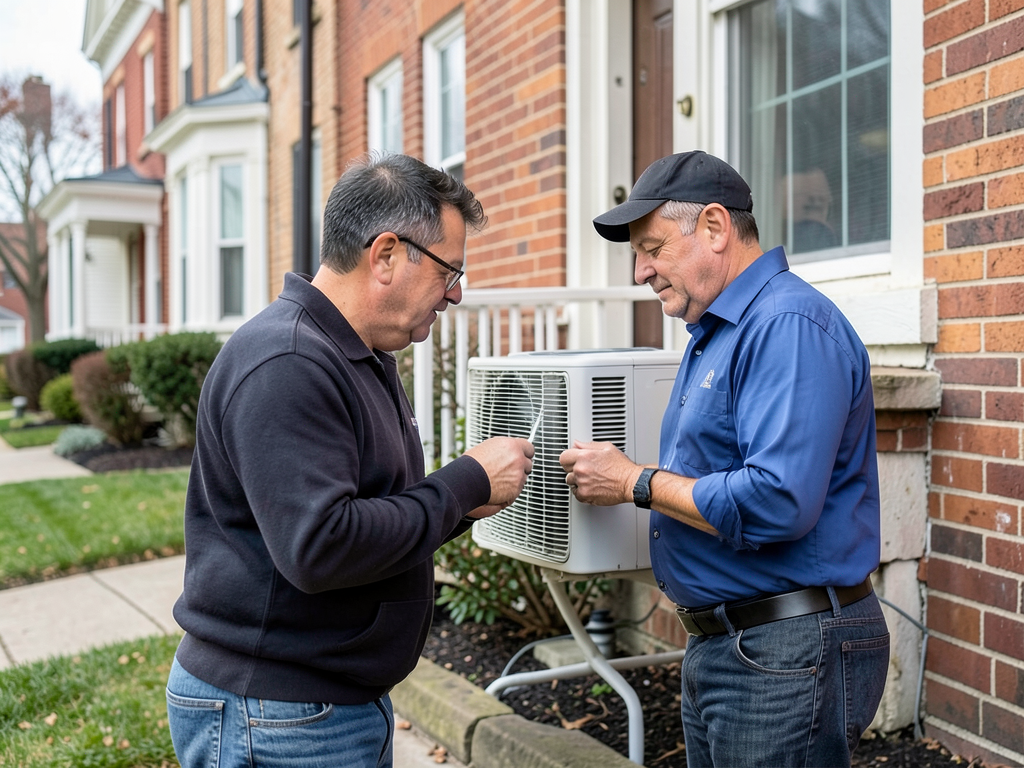
Living in Essex and Middle River means dealing with sticky summers that make your home feel like a sauna even when the AC runs. The real problem is not just heat but the moisture. High humidity makes your space uncomfortable and can damage your home over time. Choosing the right HVAC system means finding one that removes moisture effectively not just cools the air.
Most standard air conditioners cool the air but leave humidity behind. That is because they are sized to handle peak heat loads not the steady moisture removal your home needs. When humidity stays high your AC runs less efficiently your energy bills climb and you are left with that damp feeling no matter how low you set the thermostat.
The key is understanding how humidity control works. Your AC removes moisture through condensation on the evaporator coil. But if the system cycles on and off too quickly what technicians call short cycling it never runs long enough to pull moisture from the air. That is why many homes in Essex and Middle River feel cool but still sticky.
Understanding Maryland’s Humidity Challenge
The Chesapeake Bay creates a microclimate that affects Essex and Middle River differently than inland areas. Summer dew points regularly hit the mid-70s meaning the air holds more moisture than most AC systems are designed to handle. When outdoor air is saturated your system works harder just to make a dent in indoor humidity.. Read more about Protecting Your Outdoor AC Compressor from Corrosion and Salt Air in Bowleys Quarters.
Historic building patterns in these communities add another layer of complexity. Many homes have original ductwork that was not designed for modern cooling loads. Narrow ducts restrict airflow causing the evaporator coil to freeze or the system to short cycle. That is why some homeowners notice their AC runs constantly but never quite catches up.
Local building codes also play a role. Maryland’s energy efficiency standards require specific insulation and air sealing levels. While this saves energy it can trap moisture inside if your HVAC is not properly sized. The result is a perfect storm cool but clammy air that feels worse than the heat outside. Maryland HVAC Code Section 603.
Top HVAC Configurations for Humidity Control
Not all HVAC systems handle humidity the same way. Here are the configurations that actually work in our coastal climate:
Variable-Speed Air Conditioners
Variable-speed compressors adjust their output based on cooling demand. Instead of running at full blast then shutting off they operate at lower speeds for longer periods. This extended run time is crucial for moisture removal. A variable-speed unit might run at 40 percent capacity for hours rather than 100 percent for minutes.
The technology also prevents temperature swings. Your home stays within one or two degrees of your setpoint instead of fluctuating by five or six degrees. This consistency matters in humidity control because it prevents the cool then clammy cycle many homeowners experience.
High-Efficiency Heat Pumps with Enhanced Dehumidification
Modern heat pumps include dedicated dehumidification modes. These modes temporarily reduce cooling output while maximizing moisture removal. The system runs longer but at a lower intensity pulling more water from the air without overcooling your space.
Heat pumps also excel in shoulder seasons when you need humidity control but not full cooling. Many models include a dry mode that runs the fan at low speed while the compressor removes moisture. This is perfect for those sticky spring and fall days when opening windows is not an option.
Hybrid Dual-Fuel Systems
Dual-fuel systems combine a heat pump with a gas furnace. The heat pump handles cooling and mild heating while the gas furnace takes over during extreme cold. This setup gives you the humidity control benefits of a heat pump year-round with backup heating when temperatures plummet.
The key advantage is efficiency. Heat pumps use electricity to move heat rather than generate it making them more efficient than gas furnaces for cooling. When paired with a variable-speed compressor they provide superior humidity control compared to standard AC units.
Critical Features for Humidity Control
Beyond the basic system type certain features make a huge difference in humidity performance:
Variable-Speed ECM Motors
Electronically commutated motors or ECMs adjust airflow based on cooling demand. Unlike single-speed blowers that run at full capacity or not at all ECMs can operate at any speed between zero and 100 percent. This flexibility means the system can maintain optimal airflow across varying conditions.
During high humidity the ECM can slow down to increase contact time between air and the evaporator coil. This longer contact time allows more moisture to condense out. The motor also uses less electricity at lower speeds reducing operating costs while improving comfort.
SEER2 and HSPF2 Ratings
The new SEER2 and HSPF2 ratings provide more accurate efficiency measurements than the old standards. These ratings account for real-world conditions including humidity. A system with a high SEER2 rating does not just save energy it is designed to handle the moisture loads common in coastal areas.
Look for systems with SEER2 ratings of 16 or higher for optimal humidity control. The higher efficiency means the system can run longer cycles at lower power which is exactly what you need for moisture removal.
Enhanced Evaporator Coils
The evaporator coil is where moisture removal happens. Enhanced coils feature larger surface areas and improved fin designs that maximize contact with humid air. Some models include anti-microbial coatings that prevent mold growth on the coil surface.
Proper coil sizing matters too. An undersized coil cannot remove enough moisture while an oversized one might cool too quickly without dehumidifying. That is why proper system sizing through Manual J calculations is critical.
The Whole-Home Dehumidifier Solution
Sometimes your HVAC system needs backup. Whole-home dehumidifiers work alongside your existing equipment to handle extreme moisture loads. These units can remove 70 to 135 pints of water per day far more than most AC systems can handle alone.
Standalone dehumidifiers offer several advantages. They can maintain 45-50 percent relative humidity even when your AC is not running. This prevents that cool but clammy feeling that plagues many homes. They also protect your home from moisture damage by keeping humidity in the optimal range year-round.
Integration is key. Modern dehumidifiers can communicate with your HVAC system coordinating operation to maximize efficiency. Some models include built-in air filters that improve indoor air quality while removing moisture.
Baltimore-Specific Installation Considerations
Rowhomes and historic homes in Essex and Middle River present unique challenges. Narrow closets and low ceilings limit equipment options. Many homes lack return air pathways causing pressure imbalances that reduce system efficiency.
Ductless mini-split systems often solve these problems. They do not require extensive ductwork and can be installed in tight spaces. Multiple indoor units allow zoning so you can dehumidify occupied areas without cooling empty rooms. Getting Ductless Mini Split Installation for Your Federal Hill Rowhome.
Local utility rebates can offset costs. BGE and Pepco offer incentives for high-efficiency equipment that meets specific performance criteria. These rebates often require professional installation and documentation so working with a certified contractor is essential.
Manual J Load Calculations: Why They Matter
A Manual J calculation determines the exact heating and cooling capacity your home needs. This is not just about square footage it accounts for insulation levels window orientation air infiltration and yes humidity loads.
Many contractors skip this step or use rule-of-thumb sizing. That is a mistake in our climate. An undersized system cannot keep up with humidity while an oversized one short cycles and leaves moisture behind. The calculation ensures your system is sized for both temperature and moisture control.
The process involves measuring each room evaluating insulation and calculating heat gain from sunlight appliances and occupants. It typically takes 2-3 hours but prevents years of discomfort and high energy bills.
Thermostats with Humidity Control
Modern smart thermostats do more than control temperature. Many include humidity sensors and can activate dehumidification modes automatically. Some models allow you to set target humidity levels just like temperature setpoints.
Hygrostats take this further by controlling humidity independently of temperature. They can activate your system when humidity rises above your setpoint even if the temperature is comfortable. This prevents that sticky feeling that makes your home uncomfortable.
Integration with whole-home dehumidifiers allows coordinated operation. The thermostat can signal the dehumidifier to run when humidity spikes then shut it off once conditions improve. This automation eliminates the need to manually adjust settings as weather changes.
Maintenance for High-Humidity Environments
Coastal humidity creates specific maintenance challenges. Drain lines clog more frequently due to algae growth in moist conditions. Evaporator coils accumulate dirt faster reducing efficiency. Condensate pumps fail when they cannot keep up with moisture loads.
Annual maintenance should include drain line cleaning with algaecide treatment. This prevents the musty odors that develop when moisture sits in the system. Coil cleaning should happen twice yearly in high-humidity areas to maintain efficiency.
Check condensate pumps quarterly. These small pumps remove water from the drain pan when gravity drainage is not possible. A failed pump causes water damage and system shutdown. Listen for unusual noises that might indicate bearing wear or motor issues.
Indoor Air Quality and Mold Prevention
High humidity creates ideal conditions for mold growth. Mold can start growing in 24-48 hours when relative humidity exceeds 60 percent. That is why maintaining 45-50 percent humidity is crucial for both comfort and health.
UV light systems installed in the ductwork kill mold spores and bacteria. These lights work continuously to sanitize the air as it passes through your system. Combined with proper humidity control they prevent the musty odors and health issues associated with mold.
Air purifiers with HEPA filters remove mold spores dust mites and other allergens that thrive in humid conditions. Some models include activated carbon filters that absorb odors and volatile organic compounds. Carbon Monoxide Leak Detection.
Cost Considerations and ROI
High-efficiency systems with humidity control features cost more upfront but deliver significant savings. A variable-speed system might cost $2000-3000 more than a standard unit but can reduce energy bills by 30-40 percent. Over a 15-year lifespan that is $4000-6000 in savings.
Utility rebates often cover 10-20 percent of the upgrade cost. BGE’s Smart Energy Savers Program provides rebates for systems meeting specific efficiency criteria. These incentives make high-performance equipment more affordable for homeowners. BGE’s Smart Energy Savers Program.
Consider the hidden costs of inadequate humidity control mold remediation wood rot repairs and health issues from poor air quality. A proper system prevents these expenses while improving daily comfort. How to Get Emergency AC Repair in Canton When Your System Fails in a Heatwave.
Making the Right Choice for Your Home
Start with a professional assessment. A qualified contractor should perform a Manual J calculation inspect your existing ductwork and evaluate your home’s specific needs. This assessment typically takes 2-3 hours but provides the data needed for proper system selection.
Ask about variable-speed options even if they cost more upfront. The comfort improvement and energy savings usually justify the premium within 3-5 years. Also inquire about whole-home dehumidifier integration if you have persistent humidity issues.
Consider your home’s architecture. Rowhomes and historic properties might benefit from ductless mini-splits or high-velocity systems that do not require extensive remodeling. Modern equipment can often be installed without compromising your home’s character.
Do not forget about smart controls. A quality thermostat with humidity control can make a standard system perform much better. These controls often pay for themselves through improved comfort and efficiency within the first year.
Finally choose a contractor experienced with coastal humidity challenges. Not all HVAC companies understand the unique demands of Maryland’s climate. Look for NATE certification and specific experience with humidity control in your area.
Frequently Asked Questions
What humidity level should I maintain in my home?
Ideal indoor humidity ranges from 45-50 percent relative humidity. This level prevents mold growth while maintaining comfort. Levels below 40 percent can cause static electricity and dry skin while levels above 60 percent promote mold and dust mites.
How do I know if my current system is properly sized?
Signs of improper sizing include short cycling system turns on and off frequently inability to maintain set temperature on hot days and persistent humidity even when the AC runs constantly. A Manual J calculation by a professional can determine if your system is correctly sized.
Are whole-home dehumidifiers worth the investment?
If you experience persistent humidity issues despite running your AC a whole-home dehumidifier can be worth the investment. They provide consistent humidity control protect your home from moisture damage and can reduce your AC’s workload potentially extending its lifespan.
How often should I replace my HVAC filter in a humid climate?
In humid climates replace 1-inch filters every 30-45 days and 4-inch filters every 3-6 months. More frequent replacement prevents mold growth in the filter and maintains proper airflow. Check filters monthly during peak cooling season.
Can I add humidity control to my existing system?
Yes many existing systems can be upgraded with variable-speed blowers smart thermostats with humidity control or whole-home dehumidifiers. These additions can significantly improve your current system’s performance without complete replacement.
Take Control of Your Home’s Comfort Today
Do not let another sticky summer make your home uncomfortable. The right HVAC system with proper humidity control can transform your living space from clammy to comfortable. Whether you need a complete system replacement or just want to improve your existing equipment’s performance professional assessment is the first step.
Call (443) 390-4933 today to schedule your humidity assessment. Our NATE-certified technicians understand Essex and Middle River’s unique climate challenges and can recommend solutions that actually work. Stop settling for cool but clammy air achieve true comfort with the right humidity control.
Pick up the phone and call (443) 390-4933 before the next heat wave hits. Your home deserves better than sticky uncomfortable air. Let us show you how proper humidity control can improve your comfort protect your home and lower your energy bills.
{
“@context”: “https://schema.org”,
“@type”: “BlogPosting”,
“headline”: “How to Choose an HVAC System That Actually Handles the Humidity in Essex and Middle River”,
“description”: “Find HVAC systems that control humidity in Essex and Middle River’s coastal climate. Learn about variable-speed units, dehumidifiers, and local installation tips.”,
“wordCount”: 2316,
“datePublished”: “2026-03-30T08:58:00.000Z”,
“dateModified”: “2026-03-30T08:58:00.000Z”,
“inLanguage”: “en-US”,
“mainEntityOfPage”: {
“@type”: “WebPage”,
“@id”: “https://victoryhvacbaltimore.com”
},
“publisher”: {
“@type”: “LocalBusiness”,
“name”: “Victory HVAC Baltimore”,
“url”: “https://victoryhvacbaltimore.com”
},
“author”: {
“@type”: “Organization”,
“name”: “Victory HVAC Baltimore”,
“url”: “https://victoryhvacbaltimore.com”
},
“image”: {
“@type”: “ImageObject”,
“url”: “https://victoryhvacbaltimore.com/wp-content/uploads/2026/03/how-to-choose-an-hvac-system-that-actually-handles-1.png”
}
}
{
“@context”: “https://schema.org”,
“@type”: “HVACBusiness”,
“name”: “Victory HVAC Baltimore”,
“url”: “https://victoryhvacbaltimore.com”,
“address”: {
“@type”: “PostalAddress”,
“addressLocality”: “Baltimore”
},
“areaServed”: {
“@type”: “City”,
“name”: “Baltimore”
}
}
{
“@context”: “https://schema.org”,
“@type”: “FAQPage”,
“mainEntity”: [
{
“@type”: “Question”,
“name”: “What humidity level should I maintain in my home?”,
“acceptedAnswer”: {
“@type”: “Answer”,
“text”: “Ideal indoor humidity ranges from 45-50 percent relative humidity. This level prevents mold growth while maintaining comfort. Levels below 40 percent can cause static electricity and dry skin while levels above 60 percent promote mold and dust mites.”
}
},
{
“@type”: “Question”,
“name”: “How do I know if my current system is properly sized?”,
“acceptedAnswer”: {
“@type”: “Answer”,
“text”: “Signs of improper sizing include short cycling system turns on and off frequently inability to maintain set temperature on hot days and persistent humidity even when the AC runs constantly. A Manual J calculation by a professional can determine if your system is correctly sized.”
}
},
{
“@type”: “Question”,
“name”: “Are whole-home dehumidifiers worth the investment?”,
“acceptedAnswer”: {
“@type”: “Answer”,
“text”: “If you experience persistent humidity issues despite running your AC a whole-home dehumidifier can be worth the investment. They provide consistent humidity control protect your home from moisture damage and can reduce your AC’s workload potentially extending its lifespan.”
}
},
{
“@type”: “Question”,
“name”: “How often should I replace my HVAC filter in a humid climate?”,
“acceptedAnswer”: {
“@type”: “Answer”,
“text”: “In humid climates replace 1-inch filters every 30-45 days and 4-inch filters every 3-6 months. More frequent replacement prevents mold growth in the filter and maintains proper airflow. Check filters monthly during peak cooling season.”
}
},
{
“@type”: “Question”,
“name”: “Can I add humidity control to my existing system?”,
“acceptedAnswer”: {
“@type”: “Answer”,
“text”: “Yes many existing systems can be upgraded with variable-speed blowers smart thermostats with humidity control or whole-home dehumidifiers. These additions can significantly improve your current system’s performance without complete replacement.”
}
}
]
}
{
“@context”: “https://schema.org”,
“@type”: “BreadcrumbList”,
“itemListElement”: [
{
“@type”: “ListItem”,
“position”: 1,
“name”: “Home”,
“item”: “https://victoryhvacbaltimore.com”
},
{
“@type”: “ListItem”,
“position”: 2,
“name”: “Blog”,
“item”: “https://victoryhvacbaltimore.com/blog”
},
{
“@type”: “ListItem”,
“position”: 3,
“name”: “How to Choose an HVAC System That Actually Handles the Humidity in Essex and Middle River”
}
]
}
{
“@context”: “https://schema.org”,
“@type”: “Service”,
“serviceType”: “HVAC”,
“provider”: {
“@type”: “LocalBusiness”,
“name”: “Victory HVAC Baltimore”,
“url”: “https://victoryhvacbaltimore.com”
},
“areaServed”: {
“@type”: “City”,
“name”: “Baltimore”
},
“description”: “Find HVAC systems that control humidity in Essex and Middle River’s coastal climate. Learn about variable-speed units, dehumidifiers, and local installation tips.”
}