
How Much Space Do You Really Need Around Your Outdoor AC Unit in Loch Raven?
Proper clearance around your outdoor AC unit isn’t just about looks. It’s about keeping your system running efficiently through Baltimore’s humid summers and preventing expensive repairs. In Loch Raven, where many homes have mature landscaping and tight yard spaces, getting the spacing right can make the difference between a system that lasts 15 years and one that burns out in 8. Baltimore County Mechanical Code Requirements.
The basic rule is simple. Your condenser needs at least 24 inches of clear space on all sides. But that’s just the starting point. Walls, fences, decks, and even mulch can restrict airflow and cause your system to work harder than it should. In Loch Raven’s climate, where summer humidity often exceeds 80%, restricted airflow means your unit runs longer, uses more electricity, and puts extra stress on the compressor.
Standard Clearance Guidelines: The 24-Inch Rule
The 24-inch rule comes from manufacturer specifications and Baltimore County mechanical codes. This horizontal clearance allows air to flow freely across the condenser coils. Without it, hot air gets trapped around the unit and gets sucked back in, forcing your system to cool already-warm air.
But Loch Raven homes often have unique challenges. Many properties sit on lots where the AC unit sits just feet from a neighbor’s fence or a wooden deck. In these cases, 24 inches might not be possible. When space is tight, you need to be strategic about what goes around the unit.
Vertical clearance matters just as much as horizontal space. Most manufacturers recommend at least 60 inches of clearance above the unit. This prevents heat from getting trapped under decks or overhangs. In Loch Raven, where many homes have raised decks or covered porches, this requirement often gets overlooked. Getting Ductless Mini Split Installation for Your Federal Hill Rowhome.
Specific Clearance Requirements by Obstacle
Walls and fences need 24 inches minimum. But the type of material matters. Solid brick walls create more heat reflection than wooden fences. If your unit sits against a south-facing brick wall, consider adding an extra 6-12 inches of space or installing a shade screen. Adding Central Air to Your Hampden Rowhome Without Ruining the Character.
Plants require careful planning. Shrubs should be at least 24 inches away at maturity. Many Loch Raven homeowners plant fast-growing bushes that look good for a year but quickly crowd the unit. Choose slow-growing native plants like Itea virginica or Rhododendron maximum that won’t encroach on the clearance zone.
Decks and porches need special attention. The 60-inch vertical rule means you can’t install an AC unit directly under a deck. The trapped heat will cause the system to short cycle and fail prematurely. If your Loch Raven home has a raised deck, the condenser needs to sit at least 5 feet away from the deck posts.
Dryer vents pose a serious risk. The hot, moist air from a dryer vent can cause corrosion on condenser coils and reduce efficiency by up to 15%. Keep your AC unit at least 10 feet from any dryer vent. In tight Loch Raven lots, this might mean relocating the vent or the AC unit.
Vertical Clearance: Why Overhangs and Decks Matter
Heat rises, and when it gets trapped under structures, it creates a hot zone around your AC unit. This trapped heat can raise the ambient temperature by 10-15 degrees, forcing your system to work harder. In Baltimore’s already-hot summers, this extra load can cut your system’s lifespan by years.
Overhangs from roofs or second-story additions need 60 inches of clearance. This allows hot air to escape upward rather than getting trapped against the house. If your Loch Raven home has a second-story addition with an overhang, measure carefully before finalizing AC placement.
Tree branches hanging over the unit might seem harmless, but they can drop leaves and debris into the condenser. During fall, this debris can clog the coils and reduce efficiency by up to 30%. Trim branches to maintain the 60-inch vertical clearance year-round.
Baltimore-Specific Considerations: Rowhomes and Alleyway Placement
Loch Raven has a mix of single-family homes and rowhome-style properties. In rowhomes, the AC unit often sits in a narrow side yard or alleyway. These tight spaces create unique clearance challenges. Baltimore County Code 15-8-112 requires minimum 18 inches of clearance from property lines, but manufacturers still recommend 24 inches for optimal performance.
In alleyways, the main concern is airflow from multiple directions. A unit placed against one wall might get adequate clearance on three sides but struggle with airflow from the fourth. Consider installing a louvered screen that allows airflow while maintaining the required clearance.
Heat pumps have different clearance needs than traditional AC units. During winter, heat pumps need space for the defrost cycle. Snow and ice can accumulate around the base, restricting airflow. In Loch Raven’s occasional snowstorms, maintain at least 18 inches of clearance even when the unit sits against a wall.
The Risks of Improper Clearance
Restricted airflow causes your system to run longer cycles. This increased runtime leads to higher electricity bills and puts stress on the compressor. A compressor that runs 20% longer than designed typically fails 3-5 years earlier than expected.
Coil cleaning becomes more frequent when clearance is inadequate. Debris, mulch, and grass clippings get sucked into the unit more easily. In Loch Raven’s humid climate, this debris traps moisture and creates the perfect environment for mold growth on the coils.
Safety becomes a concern when units sit too close to dryer vents or gas meters. Lint from dryer vents can accumulate on the condenser and create a fire hazard. Gas meters need 36 inches of clearance from any HVAC equipment for emergency access. How to Get Emergency AC Repair in Canton When Your System Fails in a Heatwave.
How to Fix Clearance Issues Without Moving the Unit
If your AC unit doesn’t meet clearance requirements, you have options. Relocating the unit is expensive but sometimes necessary. A typical relocation costs $1,500-$3,000 but can save thousands in premature system replacement.
Creating a dedicated pad with proper drainage can solve many clearance issues. A raised concrete pad keeps the unit above mulch drift and prevents grass from growing too close. In Loch Raven’s clay soil, proper drainage prevents the unit from sinking over time.
Strategic landscaping can maintain clearance while improving aesthetics. Install a gravel border around the unit that extends 24 inches in all directions. This prevents plants from encroaching and makes it easy to spot clearance violations during routine maintenance.
Regular maintenance catches clearance issues early. During annual service, technicians should measure clearance and identify encroaching vegetation. In Loch Raven, where many homes have mature landscaping, this check prevents small issues from becoming expensive problems.
Heat Pump Clearance: Special Considerations for Loch Raven Winters
Heat pumps need different clearance than air conditioners, especially in winter. The defrost cycle requires airflow from all sides. Snow accumulation can block this airflow and cause the system to shut down. In Loch Raven’s occasional snowstorms, maintain at least 18 inches of clearance even when the unit sits against a wall.
Ice buildup on nearby structures can drip onto the heat pump and create hazardous conditions. Keep the unit at least 24 inches from any surface where ice might accumulate and fall. This prevents damage to the coils and ensures safe operation during winter storms.
Heat pumps also need clearance for the reversing valve operation. This component switches the system between heating and cooling modes. While it doesn’t require as much space as the condenser coils, blocking access to this area can make repairs difficult and expensive. EPA Energy Efficiency Guidelines.
Landscaping and Mulch Drift Prevention
Mulch drift is a common problem in Loch Raven gardens. Over time, mulch gets blown or washed into the clearance zone around AC units. This organic material holds moisture against the unit and can cause corrosion on the base pan and electrical components.
Install a physical barrier to prevent mulch drift. A simple plastic edging or metal border keeps mulch contained while maintaining the required clearance. Choose materials that won’t rust or deteriorate in Baltimore’s humid climate.
Consider using river rock or pea gravel instead of mulch in the immediate area around the unit. These materials don’t hold moisture against the unit and make it easier to spot when plants start encroaching on the clearance zone.
Native Maryland plants can provide beauty without maintenance headaches. Switchgrass (Panicum virgatum) grows in clumps rather than spreading, making it easier to control near AC units. Black-eyed Susan (Rudbeckia hirta) provides color without aggressive root systems that might interfere with underground lines.
Impact of Salt Air and Humidity on Condenser Fins
Loch Raven sits inland from the Chesapeake Bay, but Baltimore’s coastal influence still affects outdoor equipment. Salt air can cause corrosion on condenser fins, especially in homes within 10 miles of the water. The corrosion reduces heat transfer efficiency by up to 15% over five years.
High humidity in Baltimore accelerates this corrosion process. When warm, moist air contacts the cold condenser coils, condensation forms. This moisture, combined with airborne contaminants, creates a corrosive environment that eats away at the aluminum fins.
Regular coil cleaning becomes even more important in coastal-influenced areas. Professional cleaning removes the buildup of salt, pollen, and other contaminants that reduce efficiency. In Loch Raven, schedule coil cleaning every spring before the cooling season begins.
Manufacturer-Specific Clearance Variations
Not all AC units have the same clearance requirements. High-efficiency units with larger coils might need 30 inches instead of 24. Variable-speed compressors generate less heat but still require adequate airflow for optimal performance.
Trane units often specify 24 inches minimum, while Carrier might recommend 30 inches for their highest-efficiency models. Always check the manufacturer’s installation manual for exact requirements. These specifications override general guidelines and are required for warranty compliance.
Heat pump clearances also vary by manufacturer. Some require additional space for the defrost cycle, while others have more compact designs. If you’re replacing a unit, don’t assume the new one has the same clearance needs as the old one.
DIY Clearance Measurement Guide
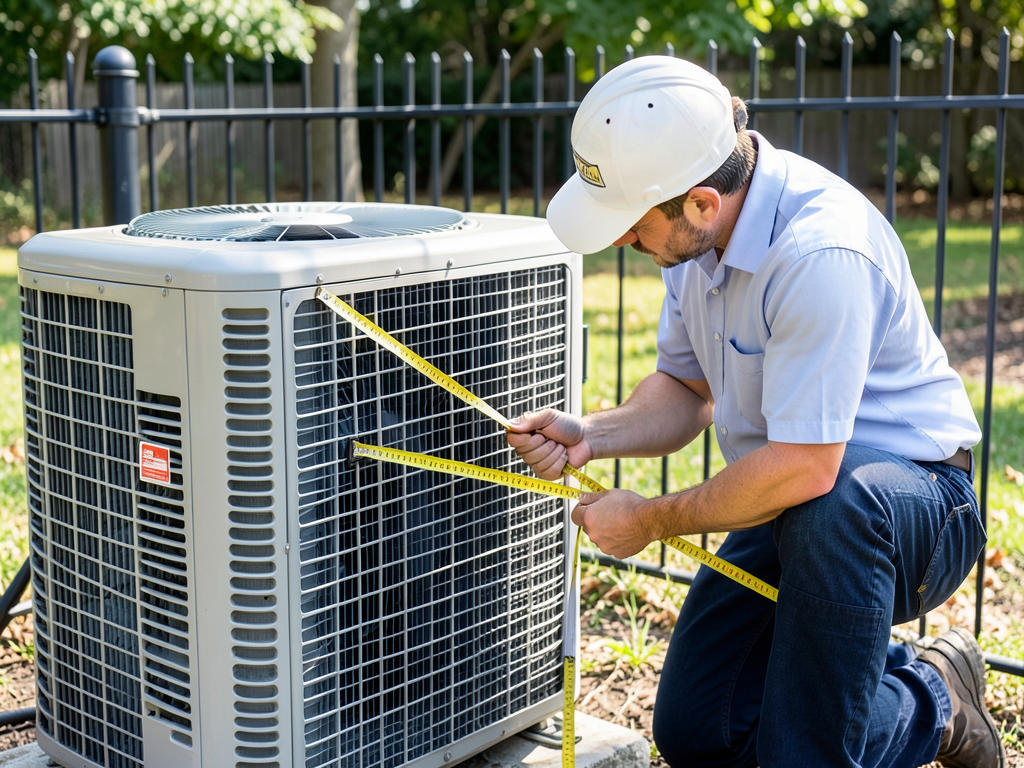
Measuring clearance is simple but requires attention to detail. Use a tape measure to check horizontal distances from the unit to walls, fences, and plants. Measure at multiple heights, as ground settling can create clearance issues near the base.
For vertical clearance, use a straight edge or level to check the distance from the top of the unit to any overhead obstruction. Remember that heat rises, so even small overhangs can trap hot air.
Check clearance after seasonal changes. Plants grow faster in Baltimore’s humid summers, and snow accumulation in winter can reduce effective clearance. Make clearance checks part of your spring and fall maintenance routine.
Document your measurements with photos. This creates a baseline for future comparisons and helps technicians identify changes that might affect system performance.
When to Call a Professional
Call a professional if you notice your AC running constantly but not cooling effectively. This often indicates airflow restrictions from clearance issues. Other signs include ice buildup on the coils, unusual noises, or a sudden increase in electricity bills.
Professional assessment includes checking for code compliance. Baltimore County requires permits for AC installations, and clearance violations can result in failed inspections. A licensed HVAC contractor can identify issues that violate local codes and recommend solutions.
Don’t wait for system failure to address clearance issues. The cost of fixing clearance problems is much less than replacing a compressor that failed due to restricted airflow. In Loch Raven’s climate, proactive maintenance saves money and prevents uncomfortable breakdowns during summer heat waves.
Frequently Asked Questions
How close can I plant shrubs to my AC unit?
Plant shrubs at least 24 inches away from the AC unit at their mature size. Fast-growing plants can quickly encroach on this space, so choose slow-growing varieties or plan for regular pruning.
Can I build a fence around my AC unit for aesthetics?
Yes, but maintain at least 24 inches of clearance on all sides. Use louvered or open designs that allow airflow rather than solid panels that trap heat.
What happens if my AC unit doesn’t meet clearance requirements?
Restricted airflow causes the system to work harder, leading to higher energy bills, more frequent repairs, and shorter equipment life. In severe cases, it can cause the compressor to fail completely.
How much does it cost to relocate an AC unit for proper clearance?
Relocation typically costs $1,500-$3,000, depending on the complexity of the job and whether new refrigerant lines or electrical work are needed.
Does a heat pump need more clearance than a regular AC unit?
Heat pumps need similar horizontal clearance but require additional consideration for winter operation, including space for snow clearance and the defrost cycle.
Can I install my AC unit under a deck or porch?
No. The 60-inch vertical clearance requirement means AC units cannot be installed under decks or porches where heat would get trapped.
How often should I check AC unit clearance?
Check clearance at least twice yearly, in spring and fall. Plants grow quickly in Baltimore’s climate, and seasonal changes can affect clearance requirements.
What’s the minimum clearance from a property line?
Baltimore County Code requires at least 18 inches from property lines, but manufacturers recommend 24 inches for optimal performance and warranty compliance.
Can mulch touching my AC unit cause problems?
Yes. Mulch holds moisture against the unit and can cause corrosion. Maintain at least 24 inches of clearance and use a barrier to prevent mulch drift.
Do high-efficiency AC units need more clearance?
Some high-efficiency units with larger coils might need 30 inches instead of 24. Always check the manufacturer’s installation specifications for exact requirements.
- Gather Tools
Collect a tape measure, level, and camera for documentation.
- Measure Horizontal Clearance
Check 24 inches of space on all sides, measuring at multiple heights.
- Check Vertical Clearance
Ensure 60 inches of space above the unit, using a level to check for overhangs.
- Inspect for Obstructions
Look for encroaching plants, mulch drift, or structures that might restrict airflow.
- Document Findings
Take photos and note any clearance violations for future reference.
Proper AC unit clearance in Loch Raven isn’t complicated, but it requires attention to detail and regular maintenance. The 24-inch rule provides a good starting point, but local conditions, building codes, and specific equipment requirements all play a role in determining the right spacing for your system.
Don’t let clearance issues shorten your AC unit’s life or drive up your energy bills. If you’re unsure about your current setup or notice signs of restricted airflow, call (443) 390-4933 today to schedule a professional assessment. Our technicians know Loch Raven’s unique challenges and can recommend solutions that keep your system running efficiently for years to come.
Pick up the phone and call (443) 390-4933 before the next heat wave hits. Proper clearance today prevents costly repairs tomorrow.
{
“@context”: “https://schema.org”,
“@type”: “BlogPosting”,
“headline”: “How Much Space Do You Really Need Around Your Outdoor AC Unit in Loch Raven?”,
“description”: “Discover exact clearance requirements for AC units in Loch Raven homes. Learn Baltimore County codes, heat pump needs, and how proper spacing prevents costly repairs.”,
“wordCount”: 2493,
“datePublished”: “2026-05-11T10:39:00.000Z”,
“dateModified”: “2026-05-11T10:39:00.000Z”,
“inLanguage”: “en-US”,
“mainEntityOfPage”: {
“@type”: “WebPage”,
“@id”: “https://victoryhvacbaltimore.com”
},
“publisher”: {
“@type”: “LocalBusiness”,
“name”: “Victory HVAC Baltimore”,
“url”: “https://victoryhvacbaltimore.com”
},
“author”: {
“@type”: “Organization”,
“name”: “Victory HVAC Baltimore”,
“url”: “https://victoryhvacbaltimore.com”
},
“image”: {
“@type”: “ImageObject”,
“url”: “https://victoryhvacbaltimore.com/wp-content/uploads/2026/03/how-much-space-do-you-really-need-around-your-outd-1.png”
}
}
{
“@context”: “https://schema.org”,
“@type”: “HVACBusiness”,
“name”: “Victory HVAC Baltimore”,
“url”: “https://victoryhvacbaltimore.com”,
“address”: {
“@type”: “PostalAddress”,
“addressLocality”: “Baltimore”
},
“areaServed”: {
“@type”: “City”,
“name”: “Baltimore”
}
}
{
“@context”: “https://schema.org”,
“@type”: “FAQPage”,
“mainEntity”: [
{
“@type”: “Question”,
“name”: “How close can I plant shrubs to my AC unit?”,
“acceptedAnswer”: {
“@type”: “Answer”,
“text”: “Plant shrubs at least 24 inches away from the AC unit at their mature size. Fast-growing plants can quickly encroach on this space, so choose slow-growing varieties or plan for regular pruning.”
}
},
{
“@type”: “Question”,
“name”: “Can I build a fence around my AC unit for aesthetics?”,
“acceptedAnswer”: {
“@type”: “Answer”,
“text”: “Yes, but maintain at least 24 inches of clearance on all sides. Use louvered or open designs that allow airflow rather than solid panels that trap heat.”
}
},
{
“@type”: “Question”,
“name”: “What happens if my AC unit doesn’t meet clearance requirements?”,
“acceptedAnswer”: {
“@type”: “Answer”,
“text”: “Restricted airflow causes the system to work harder, leading to higher energy bills, more frequent repairs, and shorter equipment life. In severe cases, it can cause the compressor to fail completely.”
}
},
{
“@type”: “Question”,
“name”: “How much does it cost to relocate an AC unit for proper clearance?”,
“acceptedAnswer”: {
“@type”: “Answer”,
“text”: “Relocation typically costs $1,500-$3,000, depending on the complexity of the job and whether new refrigerant lines or electrical work are needed.”
}
},
{
“@type”: “Question”,
“name”: “Does a heat pump need more clearance than a regular AC unit?”,
“acceptedAnswer”: {
“@type”: “Answer”,
“text”: “Heat pumps need similar horizontal clearance but require additional consideration for winter operation, including space for snow clearance and the defrost cycle.”
}
},
{
“@type”: “Question”,
“name”: “Can I install my AC unit under a deck or porch?”,
“acceptedAnswer”: {
“@type”: “Answer”,
“text”: “No. The 60-inch vertical clearance requirement means AC units cannot be installed under decks or porches where heat would get trapped.”
}
},
{
“@type”: “Question”,
“name”: “How often should I check AC unit clearance?”,
“acceptedAnswer”: {
“@type”: “Answer”,
“text”: “Check clearance at least twice yearly, in spring and fall. Plants grow quickly in Baltimore’s climate, and seasonal changes can affect clearance requirements.”
}
},
{
“@type”: “Question”,
“name”: “What’s the minimum clearance from a property line?”,
“acceptedAnswer”: {
“@type”: “Answer”,
“text”: “Baltimore County Code requires at least 18 inches from property lines, but manufacturers recommend 24 inches for optimal performance and warranty compliance.”
}
},
{
“@type”: “Question”,
“name”: “Can mulch touching my AC unit cause problems?”,
“acceptedAnswer”: {
“@type”: “Answer”,
“text”: “Yes. Mulch holds moisture against the unit and can cause corrosion. Maintain at least 24 inches of clearance and use a barrier to prevent mulch drift.”
}
},
{
“@type”: “Question”,
“name”: “Do high-efficiency AC units need more clearance?”,
“acceptedAnswer”: {
“@type”: “Answer”,
“text”: “Some high-efficiency units with larger coils might need 30 inches instead of 24. Always check the manufacturer’s installation specifications for exact requirements.”
}
}
]
}
{
“@context”: “https://schema.org”,
“@type”: “HowTo”,
“name”: “How to Measure AC Unit Clearance”,
“step”: [
{
“@type”: “HowToStep”,
“position”: 1,
“name”: “Gather Tools”,
“text”: “Collect a tape measure, level, and camera for documentation.”
},
{
“@type”: “HowToStep”,
“position”: 2,
“name”: “Measure Horizontal Clearance”,
“text”: “Check 24 inches of space on all sides, measuring at multiple heights.”
},
{
“@type”: “HowToStep”,
“position”: 3,
“name”: “Check Vertical Clearance”,
“text”: “Ensure 60 inches of space above the unit, using a level to check for overhangs.”
},
{
“@type”: “HowToStep”,
“position”: 4,
“name”: “Inspect for Obstructions”,
“text”: “Look for encroaching plants, mulch drift, or structures that might restrict airflow.”
},
{
“@type”: “HowToStep”,
“position”: 5,
“name”: “Document Findings”,
“text”: “Take photos and note any clearance violations for future reference.”
}
],
“image”: “https://victoryhvacbaltimore.com/wp-content/uploads/2026/03/how-much-space-do-you-really-need-around-your-outd-1.png”
}
{
“@context”: “https://schema.org”,
“@type”: “BreadcrumbList”,
“itemListElement”: [
{
“@type”: “ListItem”,
“position”: 1,
“name”: “Home”,
“item”: “https://victoryhvacbaltimore.com”
},
{
“@type”: “ListItem”,
“position”: 2,
“name”: “Blog”,
“item”: “https://victoryhvacbaltimore.com/blog”
},
{
“@type”: “ListItem”,
“position”: 3,
“name”: “How Much Space Do You Really Need Around Your Outdoor AC Unit in Loch Raven?”
}
]
}
{
“@context”: “https://schema.org”,
“@type”: “Service”,
“serviceType”: “HVAC”,
“provider”: {
“@type”: “LocalBusiness”,
“name”: “Victory HVAC Baltimore”,
“url”: “https://victoryhvacbaltimore.com”
},
“areaServed”: {
“@type”: “City”,
“name”: “Baltimore”
},
“description”: “Discover exact clearance requirements for AC units in Loch Raven homes. Learn Baltimore County codes, heat pump needs, and how proper spacing prevents costly repairs.”
}