
What Those Strange Hissing and Banging Noises from Your Rosedale Furnace Actually Mean
Your furnace should run quietly in the background. When you start hearing strange sounds like hissing, banging, or popping, something is wrong. These noises are your furnace’s way of telling you it needs attention. In Rosedale’s cold winters, a malfunctioning furnace can leave your family uncomfortable and even create safety hazards. Let me walk you through what these sounds mean and when you need to call for help.
Common Furnace Noises and What They Mean
Different sounds point to different problems. Here’s how to identify what you’re hearing:
- Delayed Ignition Boom
A loud boom when your furnace starts sounds like a small explosion. This happens when gas builds up before igniting.
- Thermal Expansion Pop
Metallic popping sounds as your furnace heats up. This is usually ductwork expanding and contracting.
- Blower Motor Squeal
High-pitched squealing as the blower runs. This indicates worn bearings or a loose belt.
- Scraping Metal
Grinding or scraping sounds during operation. This could mean a failing blower wheel or motor mount.
Delayed Ignition: The Most Dangerous Sound
When you hear a loud boom when your furnace starts, you’re dealing with delayed ignition. This happens when gas builds up in the combustion chamber before the burners ignite. The resulting mini-explosion can crack your heat exchanger and release carbon monoxide into your home. Carbon Monoxide Leak Detection.
In Rosedale’s older homes, especially those built before 1980, delayed ignition is common in furnaces that haven’t had proper maintenance. The Maryland Fuel Gas Code requires annual inspections for gas appliances, but many homeowners skip this crucial service. Maryland Energy Administration.
Warning Signs:
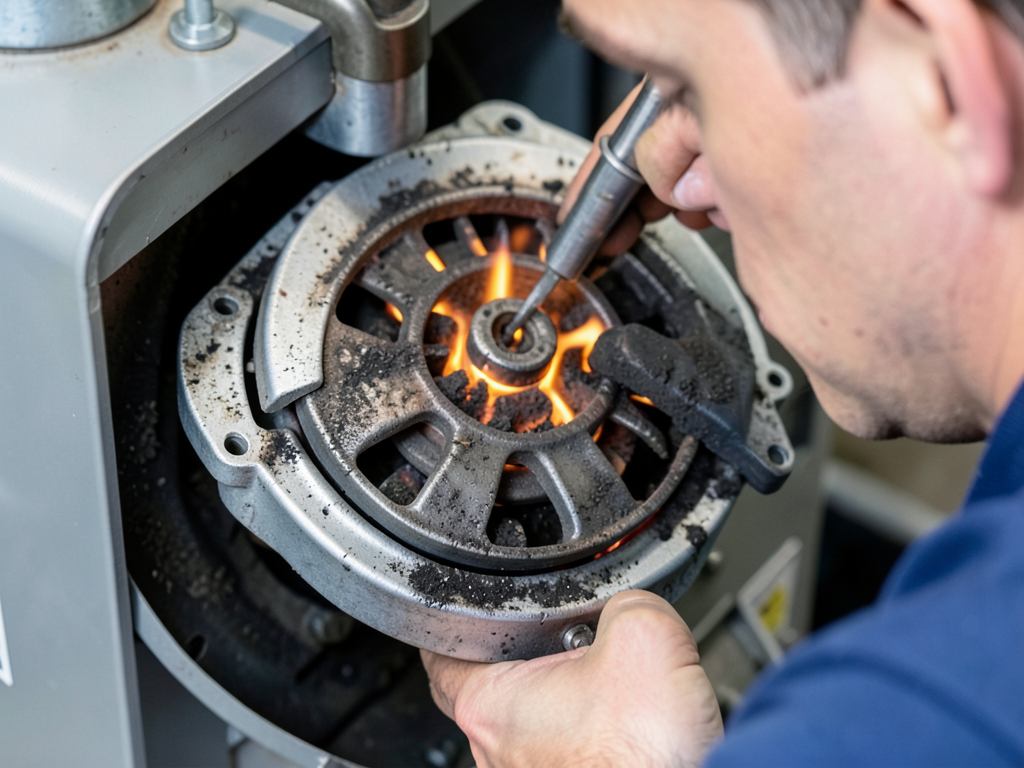
- Bright orange or yellow flames instead of blue
- Black soot around the furnace
- Unusual gas odors
- Cracked or rusted heat exchanger
If you hear this sound, turn off your furnace immediately and call a professional. This is not a DIY situation.
Thermal Expansion: The Popping Ductwork
Most Rosedale homes have metal ductwork that expands when heated and contracts when cooled. This creates popping or banging sounds, especially during the first cold night of the season when your furnace runs for extended periods.
The problem is worse in Rosedale because many homes have narrow, undersized ducts that can’t handle the volume of air needed. When warm air hits the cold metal, rapid expansion creates stress points that pop loudly.
DIY Checks for Ductwork Noise:
- Check if the popping happens only when the furnace starts or stops
- Feel along accessible ducts for hot spots that might indicate restricted airflow
- Listen for the sound to move along with the airflow
While annoying, thermal expansion usually isn’t dangerous. However, if the noise is severe or accompanied by whistling, you might have airflow restrictions that need professional attention.
Clogged Filters and Restricted Airflow
When your furnace filter gets clogged, air can’t flow properly through the system. This creates pressure imbalances that cause the ductwork to flex and pop. In Rosedale’s pollen-heavy spring and fall seasons, filters can clog quickly.
Restricted airflow also causes your furnace to work harder, leading to overheating and potential safety shutdowns. The Maryland Energy Administration recommends checking filters monthly during peak heating season.
Filter Maintenance Schedule for Rosedale Homes:
| Filter Type | Replacement Frequency | Best Brands for Maryland Climate |
|---|---|---|
| Standard Fiberglass | Every 30 days | Arm & Hammer, Filtrete Basic |
| Pleated | Every 60-90 days | 3M Filtrete, Honeywell |
| HEPA | Every 6-12 months | Aprilaire, Carrier |
Blower Motor and Mechanical Failures
Squealing, grinding, or scraping sounds often indicate blower motor problems. In Rosedale’s humid climate, moisture can cause bearings to wear faster than in drier areas. The constant heating and cooling cycles also stress motor mounts and belts.
A failing blower motor can’t move enough air across your heat exchanger, causing it to overheat. This triggers safety switches that shut down your furnace, leaving you without heat during Baltimore’s coldest nights.
Common Blower Motor Issues:
- Worn bearings creating squealing sounds
- Loose or frayed belts causing thumping
- Unbalanced blower wheels producing vibrations
- Failed capacitors preventing motor startup
When to Call for Emergency Furnace Repair in Rosedale
Not all furnace noises require immediate attention, but some situations demand quick action. Here’s when to call (443) 390-4933 for emergency service: How to Get Emergency AC Repair in Canton When Your System Fails in a Heatwave.
- Safety First
Turn off the furnace if you smell gas, hear loud booms, or see yellow flames.
- Check the Thermostat
Ensure it’s set correctly and the batteries work.
- Inspect the Filter
Replace if visibly dirty or clogged.
- Listen Carefully
Identify if the sound is coming from the burners, blower, or ductwork.
- Call for Help
If you can’t identify the problem or it seems dangerous, call (443) 390-4933.
Rosedale homes near the Back River often experience unique HVAC challenges due to the proximity to water. The higher humidity levels can accelerate corrosion in older systems, making regular maintenance even more critical.
Preventing Furnace Noises Through Regular Maintenance
Most furnace problems start small and get worse over time. A $100 maintenance visit can prevent a $1,000 emergency repair. The National Fire Protection Association recommends annual furnace inspections to prevent carbon monoxide poisoning and fire hazards. National Fire Protection Association.
Annual Maintenance Checklist:
- Clean and adjust burner assembly
- Inspect heat exchanger for cracks
- Check gas pressure and ignition system
- Lubricate moving parts
- Test safety controls and carbon monoxide levels
For Rosedale homes, scheduling maintenance in early October ensures your system is ready before the first cold snap hits Baltimore County.
Local Building Codes and Safety Requirements
Baltimore County requires permits for furnace replacements and major repairs. The Maryland Mechanical Code, based on the International Mechanical Code, sets specific requirements for venting, combustion air, and clearances that affect how your furnace operates.
Carbon monoxide detectors are mandatory in all Baltimore County homes with fuel-burning appliances. The devices must be installed on every level and outside sleeping areas, per Maryland law.
Cost Considerations for Furnace Repairs in Rosedale
Repair costs vary based on the problem’s complexity and your furnace’s age. In Rosedale’s market, expect to pay between $150-$500 for common repairs like igniter replacement or belt adjustments. Major repairs like heat exchanger replacement can cost $1,000-$2,500.
Many Rosedale homeowners find that replacing a 15+ year old furnace with a new high-efficiency model saves money long-term through lower utility bills and fewer repairs.
DIY vs. Professional Repairs: Know Your Limits
Safe DIY tasks include changing filters, cleaning vents, and checking thermostat batteries. Never attempt to repair gas lines, electrical components, or the heat exchanger yourself. Maryland law requires HVAC work to be performed by licensed contractors.
If you’re hearing strange noises from your furnace, don’t wait for a complete breakdown. Call (443) 390-4933 today to schedule an inspection. Our NATE-certified technicians serve Rosedale and all of Baltimore County with 24/7 emergency service.
Frequently Asked Questions
Why does my furnace make a loud boom when it starts?
This is likely delayed ignition, which occurs when gas builds up before igniting. It’s dangerous and requires immediate professional attention.
How often should I replace my furnace filter?
Check monthly during heating season. Standard filters need replacement every 30-90 days depending on your home’s dust and pet situation.
Can I keep running my furnace if it’s making noise?
Only if you’ve identified it as harmless thermal expansion. Any banging, booming, or squealing should be inspected by a professional.
What’s the average lifespan of a furnace in Baltimore?
Most furnaces last 15-20 years with proper maintenance. Baltimore’s humidity and temperature swings can shorten this if maintenance is neglected.
Do I need a permit for furnace repairs in Rosedale?
Major repairs and replacements require permits from Baltimore County. Your HVAC contractor should handle this process.
How much does emergency furnace repair cost?
Emergency service calls typically cost $150-$300 plus repair parts. We offer transparent pricing with no hidden fees.
Can a noisy furnace be a carbon monoxide risk?
Yes. Strange noises often indicate problems that can lead to incomplete combustion and carbon monoxide production. Always have unusual sounds inspected.
What should I do if I smell gas with the furnace noise?
Leave your home immediately, call 911, then contact your gas company. Do not operate any electrical switches or devices.
How can I prevent furnace noises?
Annual professional maintenance, regular filter changes, and keeping vents clear are the best prevention methods.
Is it normal for my furnace to make noise when it’s cold outside?
Some noise is normal, especially from ductwork expanding. However, new or worsening sounds should always be checked.
Call for Professional Help Today
Strange furnace noises aren’t just annoying—they can signal serious safety issues. Whether you’re hearing a concerning boom, annoying pops, or worrying squeals, our experienced technicians can diagnose and fix the problem quickly.
Don’t risk your family’s comfort and safety this winter. Call (443) 390-4933 now for fast, reliable furnace repair in Rosedale. We offer 24/7 emergency service because we know heating problems don’t wait for business hours.
Our team understands Rosedale’s unique HVAC challenges, from the effects of Back River humidity to the specific needs of older homes in the area. We’ll get your furnace running quietly and efficiently so you can enjoy worry-free warmth all winter long.
Remember, catching problems early saves money and prevents dangerous situations. If your furnace is talking to you through strange noises, it’s time to listen and take action.
Call (443) 390-4933 today. Your comfort and safety are worth it.
{
“@context”: “https://schema.org”,
“@type”: “BlogPosting”,
“headline”: “What Those Strange Hissing and Banging Noises from Your Rosedale Furnace Actually Mean”,
“description”: “Hear strange sounds from your furnace? Learn what hissing, banging, and popping noises mean for your Rosedale home. Get expert diagnosis and 24/7 emergency repair.”,
“wordCount”: 1564,
“datePublished”: “2026-05-16T15:02:00.000Z”,
“dateModified”: “2026-05-16T15:02:00.000Z”,
“inLanguage”: “en-US”,
“mainEntityOfPage”: {
“@type”: “WebPage”,
“@id”: “https://victoryhvacbaltimore.com”
},
“publisher”: {
“@type”: “LocalBusiness”,
“name”: “Victory HVAC Baltimore”,
“url”: “https://victoryhvacbaltimore.com”
},
“author”: {
“@type”: “Organization”,
“name”: “Victory HVAC Baltimore”,
“url”: “https://victoryhvacbaltimore.com”
},
“image”: {
“@type”: “ImageObject”,
“url”: “https://victoryhvacbaltimore.com/wp-content/uploads/2026/03/what-those-strange-hissing-and-banging-noises-from-1.png”
}
}
{
“@context”: “https://schema.org”,
“@type”: “HVACBusiness”,
“name”: “Victory HVAC Baltimore”,
“url”: “https://victoryhvacbaltimore.com”,
“address”: {
“@type”: “PostalAddress”,
“addressLocality”: “Baltimore”
},
“areaServed”: {
“@type”: “City”,
“name”: “Baltimore”
}
}
{
“@context”: “https://schema.org”,
“@type”: “FAQPage”,
“mainEntity”: [
{
“@type”: “Question”,
“name”: “Why does my furnace make a loud boom when it starts?”,
“acceptedAnswer”: {
“@type”: “Answer”,
“text”: “This is likely delayed ignition, which occurs when gas builds up before igniting. It’s dangerous and requires immediate professional attention.”
}
},
{
“@type”: “Question”,
“name”: “How often should I replace my furnace filter?”,
“acceptedAnswer”: {
“@type”: “Answer”,
“text”: “Check monthly during heating season. Standard filters need replacement every 30-90 days depending on your home’s dust and pet situation.”
}
},
{
“@type”: “Question”,
“name”: “Can I keep running my furnace if it’s making noise?”,
“acceptedAnswer”: {
“@type”: “Answer”,
“text”: “Only if you’ve identified it as harmless thermal expansion. Any banging, booming, or squealing should be inspected by a professional.”
}
},
{
“@type”: “Question”,
“name”: “What’s the average lifespan of a furnace in Baltimore?”,
“acceptedAnswer”: {
“@type”: “Answer”,
“text”: “Most furnaces last 15-20 years with proper maintenance. Baltimore’s humidity and temperature swings can shorten this if maintenance is neglected.”
}
},
{
“@type”: “Question”,
“name”: “Do I need a permit for furnace repairs in Rosedale?”,
“acceptedAnswer”: {
“@type”: “Answer”,
“text”: “Major repairs and replacements require permits from Baltimore County. Your HVAC contractor should handle this process.”
}
},
{
“@type”: “Question”,
“name”: “How much does emergency furnace repair cost?”,
“acceptedAnswer”: {
“@type”: “Answer”,
“text”: “Emergency service calls typically cost $150-$300 plus repair parts. We offer transparent pricing with no hidden fees.”
}
},
{
“@type”: “Question”,
“name”: “Can a noisy furnace be a carbon monoxide risk?”,
“acceptedAnswer”: {
“@type”: “Answer”,
“text”: “Yes. Strange noises often indicate problems that can lead to incomplete combustion and carbon monoxide production. Always have unusual sounds inspected.”
}
},
{
“@type”: “Question”,
“name”: “What should I do if I smell gas with the furnace noise?”,
“acceptedAnswer”: {
“@type”: “Answer”,
“text”: “Leave your home immediately, call 911, then contact your gas company. Do not operate any electrical switches or devices.”
}
},
{
“@type”: “Question”,
“name”: “How can I prevent furnace noises?”,
“acceptedAnswer”: {
“@type”: “Answer”,
“text”: “Annual professional maintenance, regular filter changes, and keeping vents clear are the best prevention methods.”
}
},
{
“@type”: “Question”,
“name”: “Is it normal for my furnace to make noise when it’s cold outside?”,
“acceptedAnswer”: {
“@type”: “Answer”,
“text”: “Some noise is normal, especially from ductwork expanding. However, new or worsening sounds should always be checked.”
}
}
]
}
{
“@context”: “https://schema.org”,
“@type”: “HowTo”,
“name”: “Identifying Furnace Noises”,
“step”: [
{
“@type”: “HowToStep”,
“position”: 1,
“name”: “Delayed Ignition Boom”,
“text”: “A loud boom when your furnace starts sounds like a small explosion. This happens when gas builds up before igniting.”
},
{
“@type”: “HowToStep”,
“position”: 2,
“name”: “Thermal Expansion Pop”,
“text”: “Metallic popping sounds as your furnace heats up. This is usually ductwork expanding and contracting.”
},
{
“@type”: “HowToStep”,
“position”: 3,
“name”: “Blower Motor Squeal”,
“text”: “High-pitched squealing as the blower runs. This indicates worn bearings or a loose belt.”
},
{
“@type”: “HowToStep”,
“position”: 4,
“name”: “Scraping Metal”,
“text”: “Grinding or scraping sounds during operation. This could mean a failing blower wheel or motor mount.”
}
],
“image”: “https://victoryhvacbaltimore.com/wp-content/uploads/2026/03/what-those-strange-hissing-and-banging-noises-from-1.png”
}
{
“@context”: “https://schema.org”,
“@type”: “BreadcrumbList”,
“itemListElement”: [
{
“@type”: “ListItem”,
“position”: 1,
“name”: “Home”,
“item”: “https://victoryhvacbaltimore.com”
},
{
“@type”: “ListItem”,
“position”: 2,
“name”: “Blog”,
“item”: “https://victoryhvacbaltimore.com/blog”
},
{
“@type”: “ListItem”,
“position”: 3,
“name”: “What Those Strange Hissing and Banging Noises from Your Rosedale Furnace Actually Mean”
}
]
}
{
“@context”: “https://schema.org”,
“@type”: “Service”,
“serviceType”: “HVAC”,
“provider”: {
“@type”: “LocalBusiness”,
“name”: “Victory HVAC Baltimore”,
“url”: “https://victoryhvacbaltimore.com”
},
“areaServed”: {
“@type”: “City”,
“name”: “Baltimore”
},
“description”: “Hear strange sounds from your furnace? Learn what hissing, banging, and popping noises mean for your Rosedale home. Get expert diagnosis and 24/7 emergency repair.”
}