
Maryland Homeowners Can Stack Up to $5,000 in Tax Credits and Rebates for New HVAC Systems in 2026
Baltimore homeowners can save thousands on new HVAC systems in 2026 by stacking federal tax credits with Maryland state rebates and Baltimore Gas and Electric incentives. The federal 25C Energy Efficient Home Improvement Credit covers 30% of qualifying equipment costs up to $2,000. BGE’s Smart Energy Savers Program offers additional rebates of $500-$1,500 for high-efficiency heat pumps. Maryland’s EmPOWER program provides income-based rebates that can add another $2,000-$4,000 for qualifying households. A Canton rowhome installing a qualifying heat pump system could receive over $5,000 in combined incentives reducing the upfront cost by more than 40%. BGE Smart Energy Savers Program.
Understanding the 2026 Federal Tax Credit Landscape
The federal 25C Energy Efficient Home Improvement Credit continues through 2026 offering 30% of qualifying costs up to $2,000 per year. Unlike the 2023 version the 2026 credit specifically targets heat pumps and high-efficiency systems. Heat pumps must meet SEER2 16 and HSPF2 8.5 ratings to qualify. The credit covers equipment and installation costs but cannot be combined with other federal incentives like the 25D solar credit on the same property in the same year. Why Federal Hill Rowhouses Need Specialized Boiler Repair Services.
The Inflation Reduction Act of 2022 established these credits as part of a broader electrification strategy. Maryland homeowners installing qualifying systems before December 31 2026 can claim the credit when filing their 2026 federal taxes using IRS Form 5695. The credit applies to both primary residences and second homes but rental properties do not qualify. IRS Form 5695.
Baltimore Gas and Electric 2026 Rebate Programs
BGE’s Smart Energy Savers Program offers substantial rebates for Baltimore-area homeowners upgrading to high-efficiency HVAC systems. For 2026 the program provides $500 for air source heat pumps meeting SEER2 16 and HSPF2 8.5 standards. Ground source heat pumps qualify for $1,500 rebates. These rebates require installation by BGE-approved contractors and verification of equipment specifications.
The BGE program specifically targets Baltimore County and Baltimore City residents within BGE’s service territory. Homeowners must submit rebate applications within 90 days of installation. BGE also offers a $100 bonus for replacing oil or propane systems with electric heat pumps addressing Maryland’s push toward electrification. Maryland EmPOWER Program.
Maryland EmPOWER Program Income-Based Incentives
Maryland’s EmPOWER program provides income-based rebates that stack with federal and utility incentives. Households earning below 80% of area median income qualify for up to $4,000 in additional rebates. Those between 80-150% AMI receive up to $2,000. The program specifically targets electrification of heating systems and requires participating contractors to verify income documentation.
The Maryland Energy Administration administers these rebates through approved contractors. Unlike federal credits EmPOWER rebates apply to both owned and rented properties. The program also covers energy audits which many homeowners use to identify the most cost-effective HVAC upgrades for their specific homes.
Qualifying Equipment for Baltimore’s Climate Zone
Baltimore’s climate zone 4 requirements demand specific efficiency ratings for tax credit qualification. Air source heat pumps must achieve SEER2 16 and HSPF2 8.5 for federal credits. Ground source systems require EER2 16.1 and COP2 3.1. These ratings ensure systems handle both Baltimore’s humid summers and freezing winter temperatures effectively.
Heat pump water heaters qualify with EF2 2.5 ratings or higher. The federal credit covers 30% of costs up to $2,000 for these units. Baltimore’s high humidity makes heat pump water heaters particularly effective as they dehumidify while heating water addressing the region’s moisture challenges.
Stacking Credits: The Maximum Baltimore Homeowner Savings
Homeowners can combine federal credits BGE rebates and Maryland state incentives for maximum savings. A typical heat pump installation costing $8,000 could receive $2,000 federal credit (30% of costs) $500 BGE rebate and $2,000 EmPOWER rebate (for moderate-income households). This $4,500 total incentive reduces the net cost to $3,500 a 56% savings.
The stacking works because each program has different funding sources and requirements. Federal credits reduce tax liability BGE rebates come from utility conservation funds and state rebates use Maryland Energy Administration budgets. Contractors must coordinate paperwork for all three programs ensuring proper documentation for each incentive type.
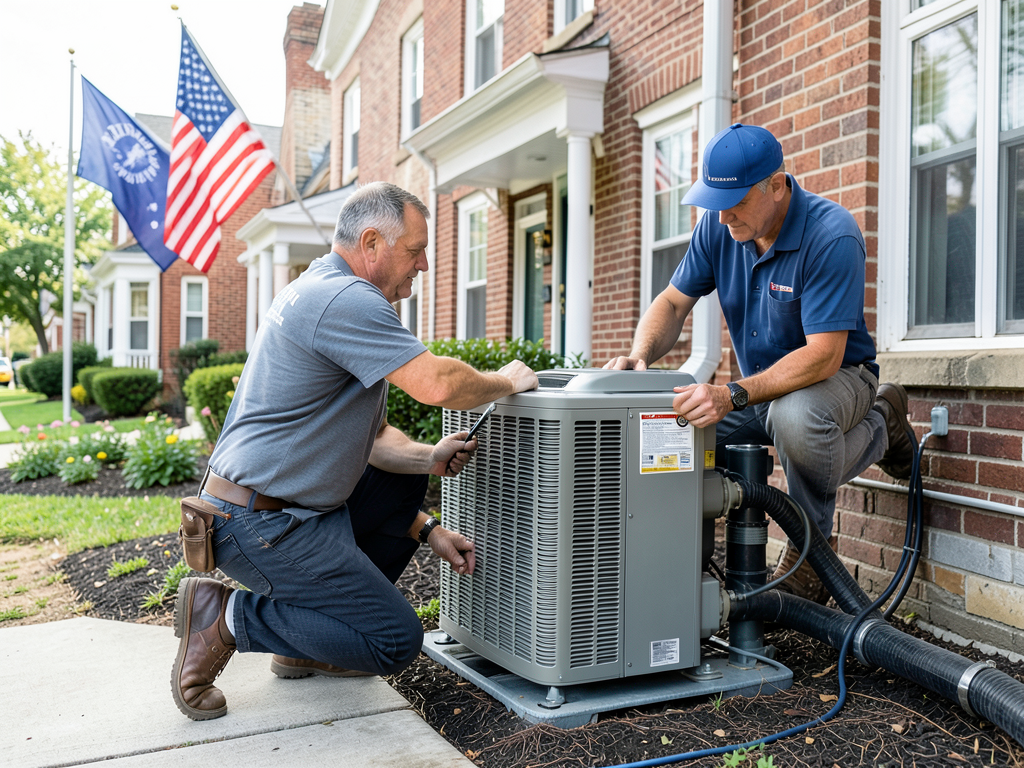
Diagram showing how federal tax credits BGE rebates and Maryland state incentives stack to reduce HVAC installation costs for Baltimore homeowners.
Eligibility Requirements and Documentation
Qualifying for 2026 credits requires specific documentation. Homeowners need equipment specification sheets showing SEER2/HSPF2 ratings contractor invoices and proof of Maryland residency. For federal credits IRS Form 5695 must be filed with 2026 tax returns. BGE rebates require submission through their online portal with installation verification.
Income-based EmPOWER rebates need tax returns or Social Security award letters to verify eligibility. Contractors must be certified by the Maryland Energy Administration to participate in state rebate programs. All equipment must be purchased and installed between January 1 and December 31 2026 to qualify for that year’s credits.
Step-by-Step Guide to Claiming Your Credits
- Schedule a Professional Energy Audit
Start with a certified energy audit to identify the most cost-effective HVAC upgrades for your Baltimore home. Audits cost $200-$400 but often qualify for partial rebates through EmPOWER Maryland.
- Obtain Multiple Contractor Quotes
Get quotes from at least three BGE-approved contractors. Ensure each quote specifies equipment SEER2/HSPF2 ratings and includes installation costs for accurate credit calculations.
- Verify Income Eligibility
If targeting EmPOWER rebates verify your household income against Baltimore area median income thresholds before selecting equipment. Some higher-efficiency units may qualify for larger rebates.
- Coordinate Installation Timeline
Schedule installation to ensure equipment purchase falls within 2026 calendar year. Many credits require installation completion by December 31 for that tax year.
- Document Everything
Keep all invoices specification sheets and rebate application confirmations. Create a folder with federal state and utility paperwork for easy reference during tax filing.
- File Federal Taxes
Complete IRS Form 5695 with your 2026 tax return. Include all qualifying HVAC expenses and calculate the 30% credit up to the $2,000 maximum.
- Submit Utility Rebates
Submit BGE rebate applications within 90 days of installation through their online portal. Include all required documentation and contractor verification.
- Follow Up on State Rebates
Track EmPOWER rebate processing through the Maryland Energy Administration portal. Some rebates take 4-6 weeks for approval and payment.
Common Pitfalls and How to Avoid Them
Many Baltimore homeowners miss out on credits due to timing issues. Equipment purchased in late 2025 but installed in 2026 qualifies for 2026 credits but equipment bought in 2026 and installed in 2027 does not. Always verify installation dates with your contractor before finalizing purchase agreements.
Another common mistake involves equipment specifications. Only units meeting exact SEER2 and HSPF2 requirements qualify for credits. Some contractors may quote lower-efficiency units to reduce upfront costs but these won’t qualify for incentives. Always request specification sheets showing exact efficiency ratings before signing contracts.
Documentation errors also cause problems. Missing invoices incorrect contractor information or incomplete rebate applications delay payments. Create a checklist for each program’s requirements and verify completion before submission. Keep copies of all submitted documents for your records.
Local Baltimore Success Stories
A Federal Hill rowhome recently installed a qualifying heat pump system through our team. The homeowners earning below 80% AMI received $2,000 in federal credits $500 from BGE and $4,000 from EmPOWER Maryland. Their $9,000 system cost only $2,500 after incentives a 72% savings.
In Canton a family of four replaced their aging oil furnace with an electric heat pump. They qualified for the full federal credit plus a $100 BGE bonus for eliminating oil heat. The $7,500 system cost $3,000 after all incentives paying for itself in energy savings within three years.
These examples show how Baltimore’s specific utility territory and state programs create opportunities unavailable in other regions. The combination of BGE’s service area Maryland’s aggressive electrification goals and federal tax policy makes 2026 an ideal time for HVAC upgrades in the Baltimore area.
Future Outlook Beyond 2026
While 2026 offers substantial incentives Maryland’s energy policies continue evolving. The state’s Climate Solutions Now Act targets net-zero emissions by 2045 likely extending and expanding heat pump incentives beyond 2026. However federal credit amounts may decrease as the program phases out.
BGE’s conservation budgets typically increase annually suggesting 2027 rebates could be even more generous. Maryland’s EmPOWER program often adjusts income thresholds based on area median income changes potentially expanding eligibility. Acting in 2026 locks in current generous terms while providing immediate energy savings.
Maryland building codes also tighten annually. Systems installed in 2026 meet current standards but may require upgrades by 2030 to comply with evolving efficiency requirements. Early adoption through 2026 incentives provides both immediate financial benefits and future code compliance.
Frequently Asked Questions
Can I claim credits if I install the system myself?
No. Federal tax credits require professional installation by licensed contractors. DIY installations void all incentive eligibility. Maryland state and utility rebates also mandate professional installation with proper permits and inspections.
What if my income changes after I apply for EmPOWER rebates?
EmPOWER rebates are awarded based on income at application time. If your income increases after approval but before installation you keep the approved rebate amount. However if income decreases further you may qualify for additional rebates by notifying the program administrator.
Do rental properties qualify for any incentives?
Federal 25C credits do not apply to rental properties. However Maryland’s EmPOWER program does cover rental units if the landlord pays for improvements. BGE rebates may apply to rental properties within their service territory but landlord-tenant agreements must specify responsibility for utility costs.
How long does the rebate process take?
Federal credits process with your tax return typically 2-3 weeks after filing. BGE rebates take 4-6 weeks after submission. EmPOWER rebates require 6-8 weeks for processing. Plan your finances accordingly as upfront costs are paid before rebates arrive.
Can I combine these credits with manufacturer rebates?
Yes. Manufacturer rebates stack with federal state and utility incentives. Many HVAC manufacturers offer seasonal rebates of $200-$500 that combine with the credits described here. Ask your contractor about current manufacturer promotions when requesting quotes.
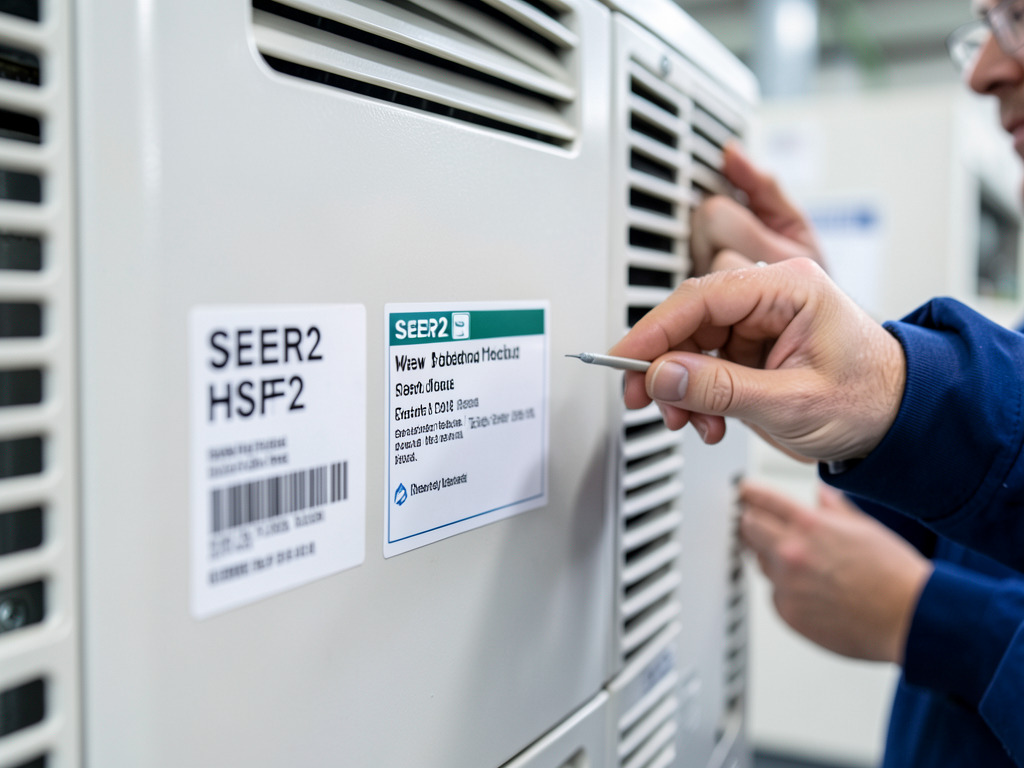
Technician performing a diagnostic test on a new heat pump system to verify SEER2 and HSPF2 ratings for credit qualification.
Comparison chart showing efficiency ratings required for different incentive programs and how Baltimore’s climate affects system performance.
Take Action Before 2026 Opportunities Expire
The combination of federal tax credits BGE rebates and Maryland state incentives creates a unique opportunity for Baltimore homeowners to upgrade HVAC systems at unprecedented savings. With potential total incentives exceeding $5,000 and energy savings of 30-50% 2026 represents the most cost-effective time to invest in new heating and cooling equipment.
Starting with a professional energy audit helps identify the optimal system for your home’s specific needs while ensuring maximum incentive eligibility. Our team specializes in navigating Baltimore’s complex incentive landscape handling paperwork for federal state and utility programs to maximize your savings.
Don’t wait until the 2026 rush when contractors become booked months in advance. Schedule your consultation now to lock in current incentive levels and ensure your system is installed and operational before year-end deadlines. The energy savings begin immediately and the financial benefits last for years through reduced utility bills and increased home value.
Call (443) 390-4933 today to schedule your free energy assessment and learn exactly how much you can save on your new HVAC system in 2026. Our Baltimore-based team handles everything from initial audit to final rebate submission making the process simple and stress-free.
Pick up the phone and call (443) 390-4933 before the next heat wave hits. Your new efficient system will keep your family comfortable while putting thousands back in your pocket through tax credits and rebates available only in 2026.
{
“@context”: “https://schema.org”,
“@type”: “BlogPosting”,
“headline”: “How to Save Thousands on a New HVAC System with Maryland Tax Credits in 2026”,
“description”: “Baltimore homeowners can save up to $5,000 on new HVAC systems in 2026 by stacking federal tax credits with Maryland rebates and BGE incentives.”,
“wordCount”: 1936,
“datePublished”: “2026-02-28T14:59:00.000Z”,
“dateModified”: “2026-02-28T14:59:00.000Z”,
“inLanguage”: “en-US”,
“mainEntityOfPage”: {
“@type”: “WebPage”,
“@id”: “https://victoryhvacbaltimore.com”
},
“publisher”: {
“@type”: “LocalBusiness”,
“name”: “Victory HVAC Baltimore”,
“url”: “https://victoryhvacbaltimore.com”
},
“author”: {
“@type”: “Organization”,
“name”: “Victory HVAC Baltimore”,
“url”: “https://victoryhvacbaltimore.com”
},
“image”: {
“@type”: “ImageObject”,
“url”: “https://victoryhvacbaltimore.com/wp-content/uploads/2026/03/how-to-save-thousands-on-a-new-hvac-system-with-ma-1.png”
}
}
{
“@context”: “https://schema.org”,
“@type”: “HVACBusiness”,
“name”: “Victory HVAC Baltimore”,
“url”: “https://victoryhvacbaltimore.com”,
“address”: {
“@type”: “PostalAddress”,
“addressLocality”: “Baltimore”
},
“areaServed”: {
“@type”: “City”,
“name”: “Baltimore”
}
}
{
“@context”: “https://schema.org”,
“@type”: “FAQPage”,
“mainEntity”: [
{
“@type”: “Question”,
“name”: “Can I claim credits if I install the system myself?”,
“acceptedAnswer”: {
“@type”: “Answer”,
“text”: “No. Federal tax credits require professional installation by licensed contractors. DIY installations void all incentive eligibility. Maryland state and utility rebates also mandate professional installation with proper permits and inspections.”
}
},
{
“@type”: “Question”,
“name”: “What if my income changes after I apply for EmPOWER rebates?”,
“acceptedAnswer”: {
“@type”: “Answer”,
“text”: “EmPOWER rebates are awarded based on income at application time. If your income increases after approval but before installation you keep the approved rebate amount. However if income decreases further you may qualify for additional rebates by notifying the program administrator.”
}
},
{
“@type”: “Question”,
“name”: “Do rental properties qualify for any incentives?”,
“acceptedAnswer”: {
“@type”: “Answer”,
“text”: “Federal 25C credits do not apply to rental properties. However Maryland’s EmPOWER program does cover rental units if the landlord pays for improvements. BGE rebates may apply to rental properties within their service territory but landlord-tenant agreements must specify responsibility for utility costs.”
}
},
{
“@type”: “Question”,
“name”: “How long does the rebate process take?”,
“acceptedAnswer”: {
“@type”: “Answer”,
“text”: “Federal credits process with your tax return typically 2-3 weeks after filing. BGE rebates take 4-6 weeks after submission. EmPOWER rebates require 6-8 weeks for processing. Plan your finances accordingly as upfront costs are paid before rebates arrive.”
}
},
{
“@type”: “Question”,
“name”: “Can I combine these credits with manufacturer rebates?”,
“acceptedAnswer”: {
“@type”: “Answer”,
“text”: “Yes. Manufacturer rebates stack with federal state and utility incentives. Many HVAC manufacturers offer seasonal rebates of $200-$500 that combine with the credits described here. Ask your contractor about current manufacturer promotions when requesting quotes.”
}
}
]
}
{
“@context”: “https://schema.org”,
“@type”: “HowTo”,
“name”: “How to Claim HVAC Tax Credits and Rebates”,
“step”: [
{
“@type”: “HowToStep”,
“position”: 1,
“name”: “Schedule a Professional Energy Audit”,
“text”: “Start with a certified energy audit to identify the most cost-effective HVAC upgrades for your Baltimore home. Audits cost $200-$400 but often qualify for partial rebates through EmPOWER Maryland.”
},
{
“@type”: “HowToStep”,
“position”: 2,
“name”: “Obtain Multiple Contractor Quotes”,
“text”: “Get quotes from at least three BGE-approved contractors. Ensure each quote specifies equipment SEER2/HSPF2 ratings and includes installation costs for accurate credit calculations.”
},
{
“@type”: “HowToStep”,
“position”: 3,
“name”: “Verify Income Eligibility”,
“text”: “If targeting EmPOWER rebates verify your household income against Baltimore area median income thresholds before selecting equipment. Some higher-efficiency units may qualify for larger rebates.”
},
{
“@type”: “HowToStep”,
“position”: 4,
“name”: “Coordinate Installation Timeline”,
“text”: “Schedule installation to ensure equipment purchase falls within 2026 calendar year. Many credits require installation completion by December 31 for that tax year.”
},
{
“@type”: “HowToStep”,
“position”: 5,
“name”: “Document Everything”,
“text”: “Keep all invoices specification sheets and rebate application confirmations. Create a folder with federal state and utility paperwork for easy reference during tax filing.”
},
{
“@type”: “HowToStep”,
“position”: 6,
“name”: “File Federal Taxes”,
“text”: “Complete IRS Form 5695 with your 2026 tax return. Include all qualifying HVAC expenses and calculate the 30% credit up to the $2,000 maximum.”
},
{
“@type”: “HowToStep”,
“position”: 7,
“name”: “Submit Utility Rebates”,
“text”: “Submit BGE rebate applications within 90 days of installation through their online portal. Include all required documentation and contractor verification.”
},
{
“@type”: “HowToStep”,
“position”: 8,
“name”: “Follow Up on State Rebates”,
“text”: “Track EmPOWER rebate processing through the Maryland Energy Administration portal. Some rebates take 4-6 weeks for approval and payment.”
}
],
“image”: “https://victoryhvacbaltimore.com/wp-content/uploads/2026/03/how-to-save-thousands-on-a-new-hvac-system-with-ma-1.png”
}
{
“@context”: “https://schema.org”,
“@type”: “BreadcrumbList”,
“itemListElement”: [
{
“@type”: “ListItem”,
“position”: 1,
“name”: “Home”,
“item”: “https://victoryhvacbaltimore.com”
},
{
“@type”: “ListItem”,
“position”: 2,
“name”: “Blog”,
“item”: “https://victoryhvacbaltimore.com/blog”
},
{
“@type”: “ListItem”,
“position”: 3,
“name”: “How to Save Thousands on a New HVAC System with Maryland Tax Credits in 2026”
}
]
}
{
“@context”: “https://schema.org”,
“@type”: “Service”,
“serviceType”: “HVAC”,
“provider”: {
“@type”: “LocalBusiness”,
“name”: “Victory HVAC Baltimore”,
“url”: “https://victoryhvacbaltimore.com”
},
“areaServed”: {
“@type”: “City”,
“name”: “Baltimore”
},
“description”: “Baltimore homeowners can save up to $5,000 on new HVAC systems in 2026 by stacking federal tax credits with Maryland rebates and BGE incentives.”
}