Menu

Outdoor Unit Not Spinning in Baltimore – Expert Diagnosis Solves the Root Cause Fast

When your outdoor unit fan stops turning, you need more than a quick fix. Victory HVAC Baltimore identifies why your AC condenser fan not working and repairs it correctly the first time.

Slider Image 1
Slider Image 2
Slider Image 3
Slider Image 4
Slider Image 5
Slider Image 7
Slider Image 8
Slider Image 9
Slider Image 10
Slider Image 11

Why Your Outdoor AC Fan Stopped Working in Baltimore's Climate

You walk outside and notice the compressor hums but the condenser fan not spinning. The air inside feels warmer by the hour. This is not a minor inconvenience in Baltimore, where July and August humidity regularly hits 70 percent. When your outside AC fan not turning, the compressor overheats, refrigerant pressure spikes, and you risk a catastrophic system failure that costs thousands instead of hundreds.

Baltimore's combination of humid summers and freeze-thaw winters creates unique stress on outdoor units. Moisture infiltrates electrical connections. Winters freeze condensation around motor bearings. Spring pollen clogs capacitor housings. By June, when you need cooling most, the weakest link gives out. That link is usually the fan motor, the capacitor, or the contactor relay.

When your air conditioner outdoor fan not running, the condenser cannot release heat. The refrigerant stays hot. The compressor works harder. Internal temperatures climb past safe thresholds. You might hear clicking, buzzing, or complete silence. Each symptom points to a different failure mode, and misdiagnosis wastes time and money.

Homeowners in Fells Point, Canton, and Hampden face this exact scenario every cooling season. The outdoor unit sits in a tight alley or shaded courtyard where airflow is already restricted. Add a failed fan, and the system chokes. You need someone who understands how Baltimore's urban density, older housing stock, and coastal humidity accelerate wear on HVAC components. Guessing does not work. You need a methodical diagnostic process that isolates the exact failure point.

Why Your Outdoor AC Fan Stopped Working in Baltimore's Climate
How We Diagnose and Fix an AC Condenser Fan Not Working

How We Diagnose and Fix an AC Condenser Fan Not Working

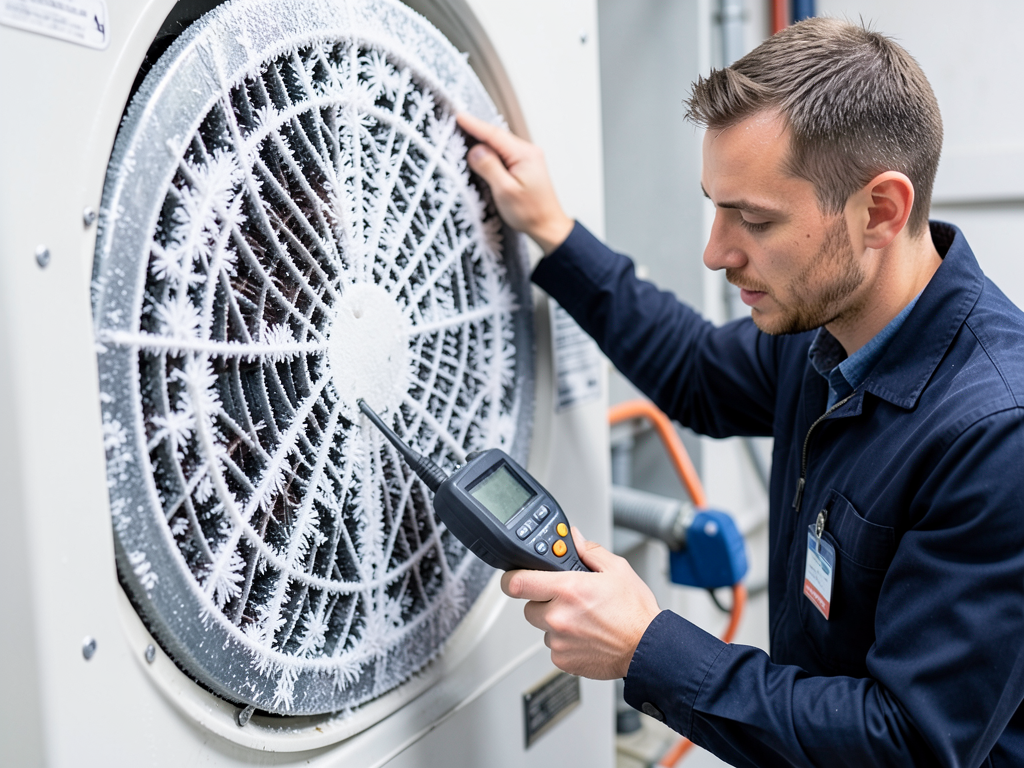
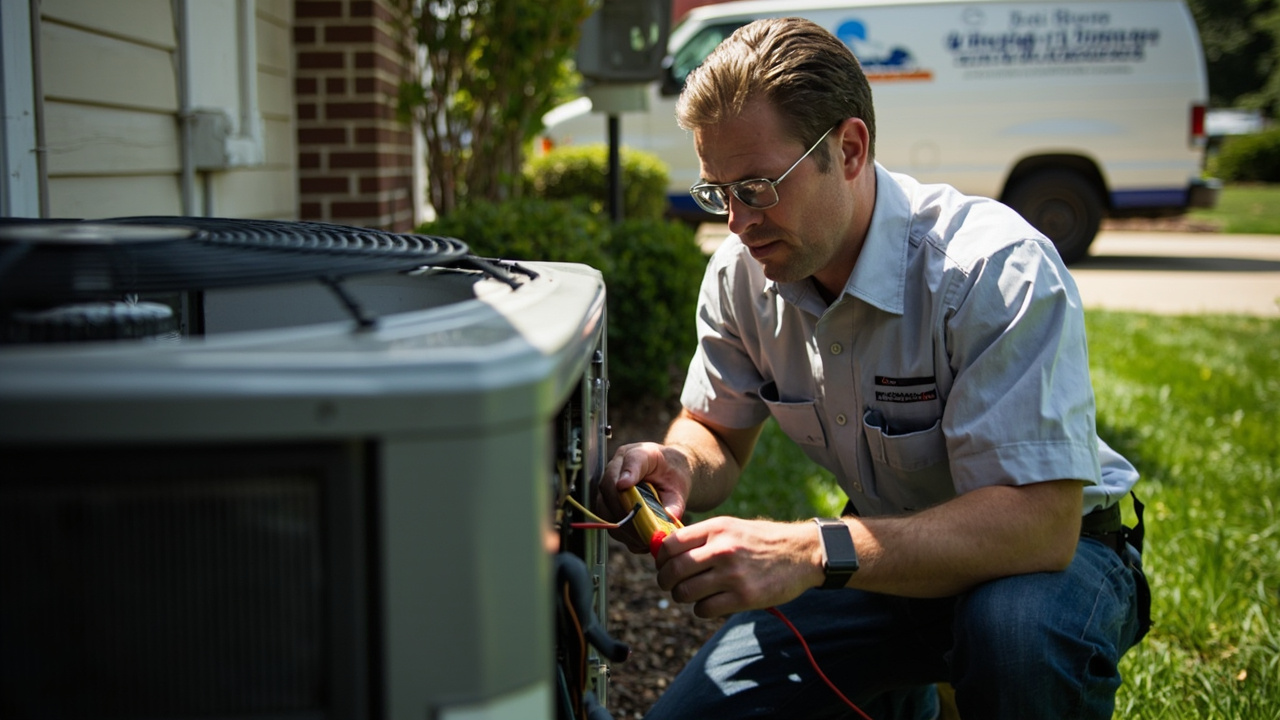
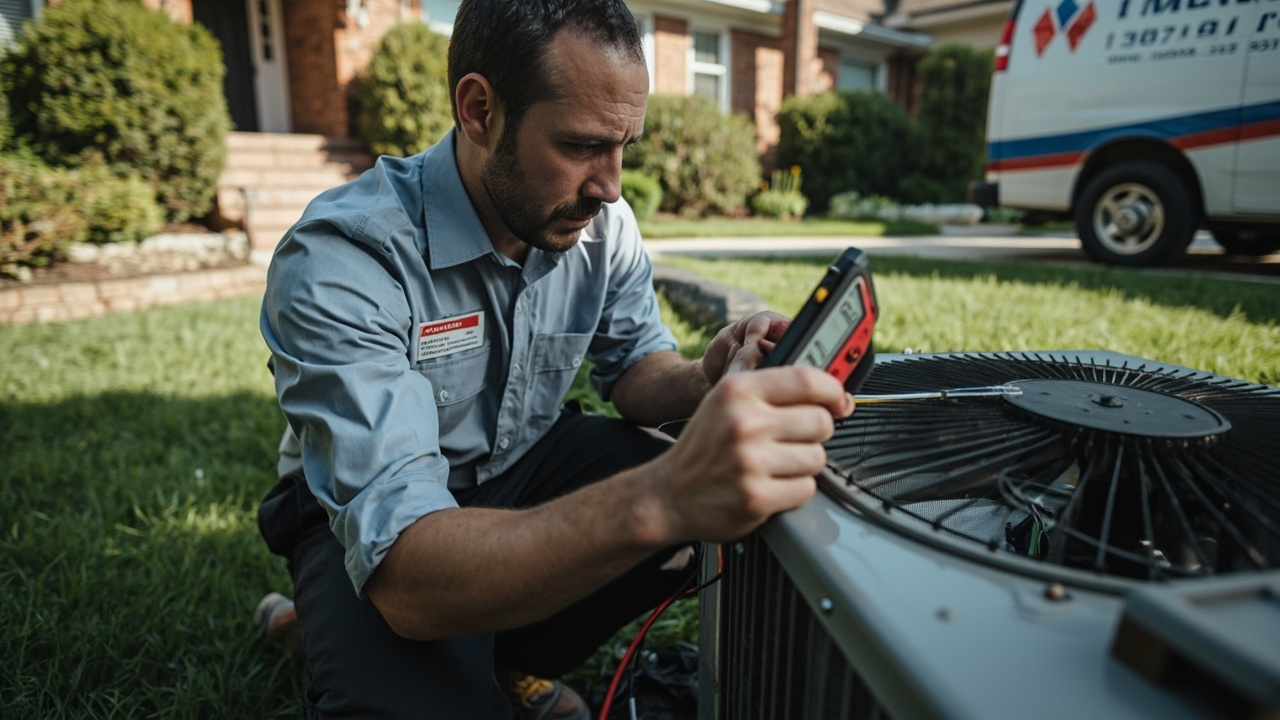
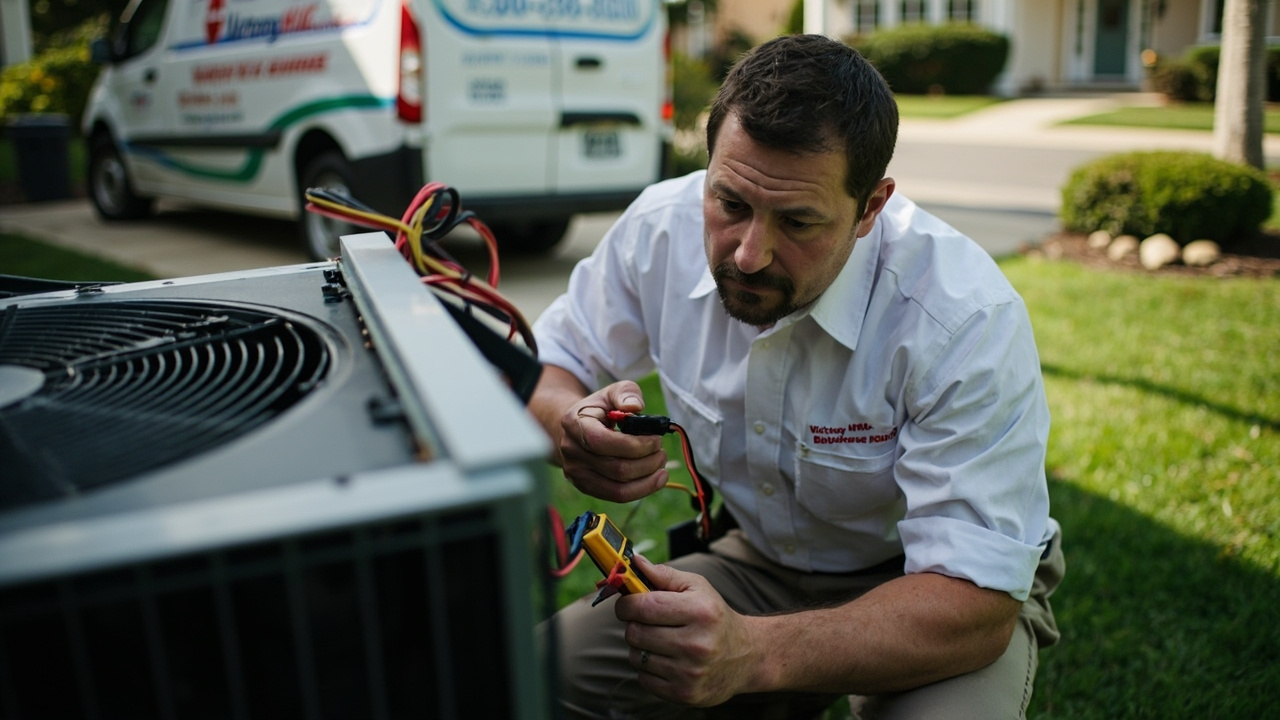
When you call Victory HVAC Baltimore about an outdoor unit fan stopped, we do not guess. We test voltage at the contactor, measure capacitance with a multimeter, and check amp draw on the fan motor under load. This eliminates speculation. If the capacitor reads below rated microfarads, it cannot store enough charge to spin the motor. If the contactor shows pitting or carbon scoring, it cannot close the circuit. If the motor windings show infinite resistance, the motor is open and must be replaced.

We carry OEM-grade capacitors rated for Baltimore's temperature swings, dual-run capacitors for systems with both fan and compressor on one unit, and hard-start kits for older compressors that struggle on startup. We do not install generic aftermarket parts that fail in six months. You get components rated for coastal humidity and thermal cycling.

If the fan blade itself is damaged, we check for bent blades, cracked hubs, or loose set screws. A blade out of balance vibrates the motor and shortens bearing life. If the motor mount is cracked, we replace it before remounting. If the condenser coil is clogged with cottonwood seeds or dirt, we clean it before reassembly. A clean coil reduces head pressure, and lower head pressure extends compressor life.

We also inspect the compressor contactor, the transformer supplying 24-volt control power, and the thermostat wiring. A weak transformer drops voltage under load. A corroded wire connection creates resistance. Resistance generates heat, and heat degrades connections further. We find the root cause, not just the symptom. That is how you avoid repeat service calls and extend system life by years.

What Happens When You Call About a Condenser Fan Not Spinning

Outdoor Unit Not Spinning in Baltimore – Expert Diagnosis Solves the Root Cause Fast
01

Initial System Assessment

We arrive with a full set of diagnostic tools and test the outdoor unit while it attempts to run. You see us check voltage at the disconnect, measure capacitance, and listen for compressor cycling. We identify whether the issue is electrical, mechanical, or both. This step takes 15 to 20 minutes and gives us a clear repair path before we touch a single component.
02

Component Replacement or Repair

Once we isolate the failed part, we replace the capacitor, contactor, or fan motor using OEM-grade components. We torque electrical connections to manufacturer spec, check blade balance, and verify proper motor rotation. If the coil needs cleaning, we do that before closing up. You get a system that runs as designed, not a jury-rigged patch job that fails in two weeks.
03

System Verification and Testing

We power the system back on and monitor fan startup, amp draw, and temperature drop across the coil. We check refrigerant pressures to confirm the compressor is not overheating. We cycle the thermostat to confirm the contactor engages cleanly. You see the outdoor unit running quietly, the fan spinning at full speed, and the compressor operating within normal parameters before we leave your property.

Why Baltimore Homeowners Trust Victory HVAC for Outdoor Unit Repairs

You call a company, they send someone who swaps a capacitor, and two weeks later the fan stops again. That happens because the capacitor was not the problem. It was a symptom. The real issue was a failing motor drawing excessive amps, which stressed the capacitor until it failed. We test the motor before we declare the capacitor bad. That is the difference between a diagnostic and a guess.

Baltimore's housing stock includes rowhomes with limited outdoor space, historic properties with vintage HVAC systems, and modern townhomes with high-efficiency units. We have worked on all of them. We know the tight clearances in Federal Hill alleys, the undersized electrical panels in Hampden, and the corroded linesets in Locust Point properties near the harbor. We carry parts for Carrier, Trane, Lennox, Rheem, and Goodman units. If your system is older, we source compatible components instead of telling you the whole unit needs replacement.

We also understand Baltimore's summer cooling load. When the heat index hits 105 degrees and the humidity makes it feel like you are breathing through a wet towel, your AC runs 12 hours a day. That is not abuse. That is survival. Your system needs to handle that load, and if a component is weak, it will fail under stress. We replace weak components before they strand you on a 95-degree Saturday afternoon when every HVAC company is booked solid.

You also get transparent pricing. We quote the repair before we start work. You decide if the repair makes sense or if replacement is smarter. We do not upsell. We do not scare you with fake diagnoses. We show you the failed part, explain why it failed, and give you options.

What to Expect When You Schedule a Service Call

Same-Day and Next-Day Availability

When your outdoor unit stops working in July, waiting three days is not an option. We prioritize cooling emergencies and offer same-day service for calls placed before noon. If you call later, we schedule next-day morning appointments. You get a two-hour arrival window, and we call 20 minutes before we arrive. You are not stuck waiting all day while your house climbs past 85 degrees. We respect your time and your need for immediate relief.

Thorough Electrical and Mechanical Testing

We do not eyeball your system and declare it fixed. We use a digital multimeter to test voltage, capacitance, and resistance. We measure amp draw with a clamp meter. We check refrigerant pressures with manifold gauges. We verify airflow across the coil with a thermometer. This process eliminates guesswork and confirms the repair solves the root problem. You get documentation of what we found and what we fixed, so you have a record if issues recur under warranty.

Reliable Cooling Restored in One Visit

You want cold air, not a callback. We carry common failure parts on every truck, so we complete most repairs without ordering components. You get a fan motor, capacitor, or contactor installed the same day. We test the system under load before we leave, cycling it on and off to confirm stable operation. You see the temperature drop inside your home within 30 minutes of us finishing the repair. That is the result that matters.

Parts Warranty and Service Follow-Up

Every component we install carries a manufacturer warranty. If a part fails prematurely, we replace it at no additional labor charge. We also offer maintenance plans that include annual inspections, priority scheduling, and discounted repairs. Regular maintenance catches weak capacitors, dirty coils, and worn contactors before they fail. You avoid emergency breakdowns and extend the life of your outdoor unit by years. Preventive care costs less than reactive repairs.

Frequently Asked Questions

You Have Questions,
We Have Answers

Why is my outside unit not spinning? +

A non-spinning outdoor unit usually points to three culprits. The capacitor may have failed, which is common in Baltimore's humid summers. The fan motor itself could be burned out from overuse or age. The contactor might be stuck or damaged, preventing power from reaching the motor. Check your circuit breaker first. If it's not tripped, the issue likely requires a technician. Debris can also jam the blades, so visually inspect the unit. Never force the blades to spin manually, as this can cause further damage to the motor or electrical components.

What is the problem if the fan is not spinning? +

When your fan does not spin, your compressor runs without proper heat exchange. This means hot refrigerant cannot cool down, which forces your system to shut off on high pressure limits. Your outdoor coil overheats rapidly. Without airflow, the compressor works harder and risks permanent damage. In Baltimore's heat and humidity, this failure escalates quickly. You will notice ice buildup on the indoor coil as refrigerant backs up. The problem stems from electrical failure, motor burnout, or a failed start capacitor. Address this immediately to prevent compressor replacement costs.

Why is my AC unit making a sound but not spinning? +

If you hear humming or buzzing but see no blade movement, the capacitor has likely failed. The capacitor provides the electrical jolt needed to start the motor. When it weakens, the motor tries to start but cannot overcome initial resistance. This creates the humming sound. Baltimore's voltage fluctuations during summer storms accelerate capacitor wear. A stuck contactor can also cause this symptom. The compressor may still run, making noise, while the fan remains motionless. Turn off your system immediately. Continuing operation without the fan will overheat and damage the compressor.

Should I turn off my AC if the fan isn't spinning? +

Yes, turn off your AC immediately. Running the system without a spinning fan will overheat your compressor within minutes. The outdoor coil cannot release heat, causing refrigerant pressure to spike. This triggers safety switches or, worse, causes permanent compressor failure. Compressor replacement costs thousands of dollars. In Baltimore's summer heat, damage happens fast. Shut down the system at the thermostat and the breaker. Call a technician before restarting. Continuing to run the unit is false economy. You risk turning a simple capacitor or motor repair into a full system replacement.

How much does it cost to fix a AC fan not spinning? +

Fan motor or capacitor replacement typically runs between $150 and $600 for parts and labor in the Baltimore area. Capacitors are cheaper, usually $150 to $300. Fan motors cost more, often $300 to $600 depending on the unit size and brand. Age and accessibility affect labor time. If the contactor also needs replacement, add another $100 to $200. Emergency service calls cost more. Regular maintenance catches capacitor wear before failure. Prices vary by contractor, unit location, and whether you need same-day service during peak cooling season when demand spikes across Baltimore metro neighborhoods.

How do you reset your outside AC unit? +

Turn off your system at the thermostat. Go to your outdoor unit and locate the power disconnect box mounted on or near the unit. Flip the switch to off or pull the block out. Wait five full minutes. This allows capacitors to discharge and resets the control board. Restore power by flipping the switch back or reinserting the block. Return inside and set your thermostat to cool. Wait three to five minutes for the system to cycle. If the fan still does not spin, the problem is mechanical or electrical, not a software glitch. Call a technician.

How do I know if my fan motor is blown? +

A blown motor shows clear signs. It will hum or buzz but not turn. You may smell burning plastic or see scorch marks near the motor housing. The motor may feel extremely hot to the touch even after shutdown. Use a multimeter to test continuity across the motor windings. No continuity means the motor is open and dead. In Baltimore's humid climate, moisture accelerates motor winding corrosion. If the shaft spins freely by hand but the motor will not start even with a new capacitor, the motor windings are likely burned out and need replacement.

Can you spray WD-40 in a fan motor? +

No, never spray WD-40 into a fan motor. WD-40 is not a lubricant. It is a solvent that displaces water and attracts dust, which will gum up bearings faster. Most modern fan motors are sealed and require no lubrication. Older motors with oil ports need electric motor oil, not WD-40. Spraying anything into a motor can damage windings or create electrical shorts. If your motor squeals or seizes, it needs professional service or replacement. Baltimore's humidity already stresses motors. Adding the wrong product accelerates failure and voids any remaining warranty on the unit.

How do I make my fan spin again? +

Do not attempt DIY fixes on a non-spinning fan. If debris blocks the blades, turn off power at the breaker, clear the obstruction, and restore power. If the fan still does not spin, you need a technician. The issue is electrical or mechanical. Replacing a capacitor or contactor requires knowledge of high-voltage components. Installing a new motor involves electrical connections and proper torque specs. Baltimore's summer heat makes quick repairs critical. Attempting repairs without proper tools or training risks electrical shock, further damage, or voiding warranties. Call a licensed HVAC technician to diagnose and fix the root cause safely.

What is the $5000 rule for AC? +

The $5000 rule is a replacement guideline. Multiply the repair cost by your system's age in years. If the total exceeds $5000, replacement makes more financial sense than repair. For example, a $600 repair on a 10-year-old system equals $6000, suggesting replacement. A $600 repair on a 5-year-old system equals $3000, favoring repair. This rule accounts for diminishing returns on aging equipment. In Baltimore, older systems also run less efficiently in humid conditions, increasing energy costs. The rule is not absolute but helps homeowners weigh repair versus replacement when facing expensive fixes on aging HVAC systems.

How Baltimore's Humidity and Coastal Air Damage Outdoor AC Components

Baltimore sits 10 miles from the Chesapeake Bay, and that proximity introduces salt air, high humidity, and corrosive moisture into every outdoor HVAC unit in the metro. When your condenser fan not spinning, corrosion is often the hidden culprit. Electrical terminals corrode, capacitor housings rust, and motor bearings seize from moisture infiltration. Inland cities do not see this level of accelerated degradation. You need technicians who recognize coastal corrosion patterns and replace vulnerable components before they fail catastrophically during peak cooling season.

Victory HVAC Baltimore has repaired outdoor units in every neighborhood from Towson to Glen Burnie. We know how rowhouse courtyards in Butcher's Hill trap humidity, how industrial dust in Curtis Bay clogs condenser coils, and how freeze-thaw cycles in Pikesville crack plastic fan blades. Local knowledge matters because generic repair advice from a national call center does not account for the specific environmental stress your system endures. You get technicians who live here, work here, and understand the exact conditions that cause your outdoor unit fan to stop working.
HVAC Services in The Baltimore Area

Easily locate Victory HVAC and our service areas on the map below. We are strategically positioned to provide prompt and efficient heating, ventilation, and air conditioning services across the entire region. Whether you're seeking a new installation, emergency repair, or routine maintenance, our team is readily available to reach your location quickly, ensuring your comfort is restored without delay. Feel free to zoom in to see our exact location or contact us for directions and service area details.

Address:
Victory HVAC Baltimore, 729 E Pratt St, Baltimore, MD, 21202

Additional Services We Offer

Our news updates

Latest Articles & News from The Blogs

The Best Time to Switch Your Guilford Home from Heating to Cooling Mode When should you flip that thermostat switch…

The Best Time to Switch Your Guilford Home from Heating to Cooling Mode

The Best Time to Switch Your Guilford Home from Heating to Cooling Mode When should you flip that thermostat switch…

How Much Space Does Your AC Unit Actually Need from Landscaping in Your Ruxton Yard?

How Much Space Does Your AC Unit Actually Need from Landscaping in Your Ruxton Yard? Your outdoor AC condenser needs…

Common Reasons Your Brooklyn Park AC Is Blowing Warm Air

Common Reasons Your Brooklyn Park AC Is Blowing Warm Air Your air conditioner is running but the air coming from…

Contact Us

Do not let a failed fan motor turn into a dead compressor. Call Victory HVAC Baltimore at (443) 390-4933 right now for same-day diagnostics and repair. We carry the parts, the tools, and the experience to fix your outdoor unit correctly the first time.